Mendelian Genetics Web Kit (3 Videos Via Khan Academy)

Pisum sativum (Illustration taken from Mendel's book on inheritance).

Pisum sativum (Illustration taken from Mendel’s book on inheritance).

One of the most fascinating aspects of Mendel’s paper is his success in describing the patterns of inheritance, without having any knowledge about the biological mechanisms responsible for those patterns. Although it was well-known by 1865 that peas, like all plants and animals, were made up of cells, Mendel had no knowledge of what the genetic material of the cell could be. More importantly, perhaps, he didn’t have the language of genetics to reason about such things.

Mendel’s use of mathematics (the combination series in particular) is important in this respect, because mathematics made it easy to avoid questions of biological mechanism. When he was forced to go beyond mathematics and to use natural language to describe what he saw, his description problems became more difficult. A nice example of the difficulty is seen in his use of the strange phrase “must impress their peculiarity upon” (Eigentümlichkeit aufprägen müssen), to describe dominance.”–Via.

The following videos, three of them, summarize Mendel’s most important claims on inheritance. Many of his discoveries, as you will notice while watching these videos, are still useful to understand important things about ourselves, such as our blood type:

Understanding Evolution, its evidences and mechanisms.

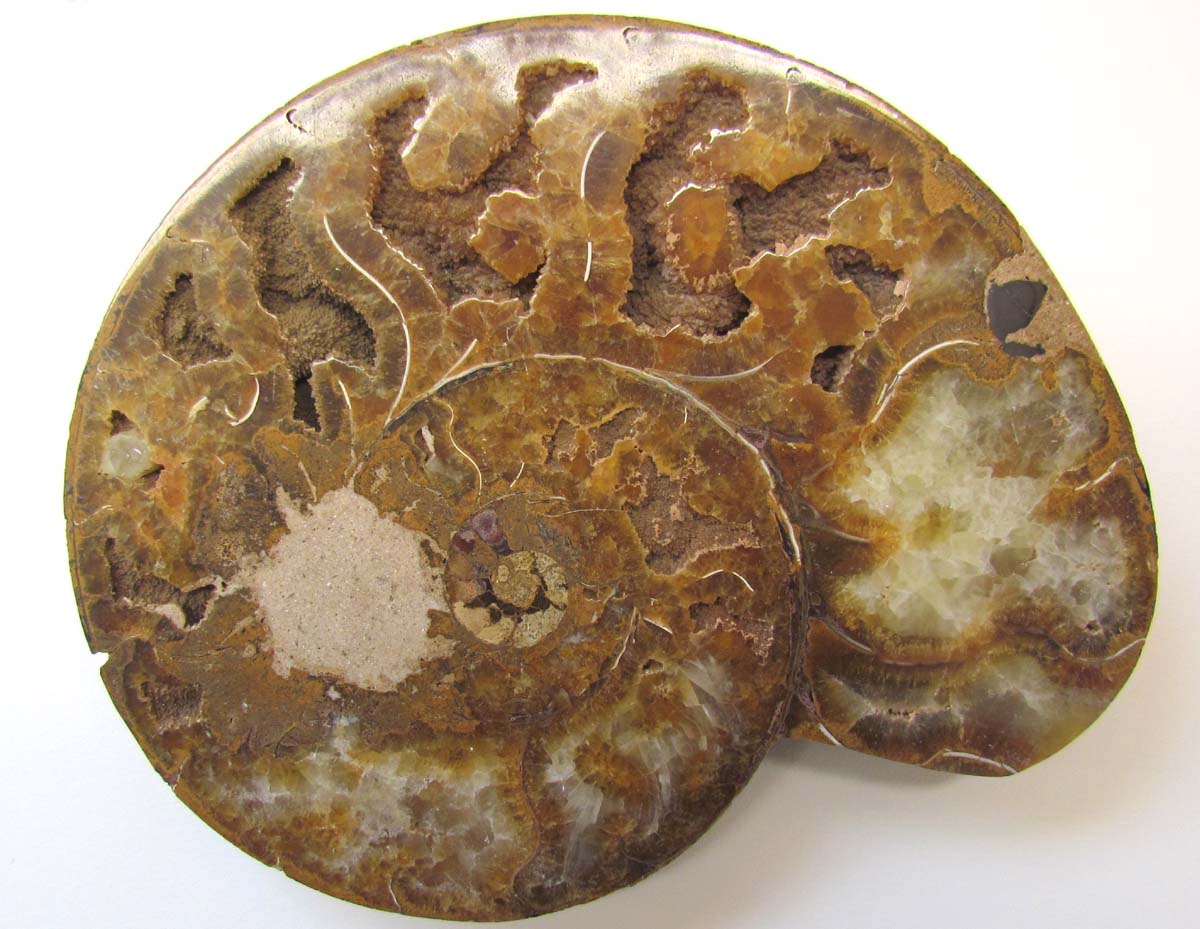
Ammonites

“Ammonites evolved 400 million years ago and survived for a long time only to become extinct 65.5 million years ago. Some ammonites were huge — fossils have been found that are more than six feet in diameter.”–Via The Agatelady.

Even when major religious institutions have come to–albeit rather cautiously–accept Natural Selection, there’s still a lot of debate. Much of it is irrational and vitriolic; ideological and tribal. The following videos and articles aim to clear some of the pseudoscientific detritus that have hampered its acceptance in Europe and, with a more rabid increase, in the United States. Denial and irrationality hinge on a total disregard for tools that time and time again have proven to be useful in the study of evolution; tools such as phylogenetic trees, radiometric dating, morphology of fossils, etc. Each and every one of these are vital to the understanding of evolution; thus, unsurprisingly, its detractors will deny their usefulness:

On radiometric dating:

On the reliability of radiometric dating:

“Recent puzzling observations of tiny variations in nuclear decay rates have led some to question the science of using decay rates to determine the relative ages of rocks and organic materials. Scientists from the National Institute of Standards and Technology (NIST), working with researchers from Purdue University, the University of Tennessee, Oak Ridge National Laboratory and Wabash College, tested the hypothesis that solar radiation might affect the rate at which radioactive elements decay and found no detectable effect.”–Via Radiometric Dating Still Reliable (Again), Research Shows.

On Fossils and their dating:

“An excavation of a seaside cave in South Africa revealed two objects that were clearly manmade—pieces of ocher stone etched with a crisscross pattern. Neither the stones nor the rock in which they were buried were volcanic in origin, though, so the researchers chose another method for determining their age: thermoluminescence.

As in argon-argon dating, the thermoluminescence clock also begins with the last time that a rock was heated to a high temperature. The extreme heat eliminates electrons stored in certain crystals—such as quartz and feldspar—within the rock. Over time, the crystals trap electrons produced by trace amounts of radioactive atoms found in the environment. By reheating the rock, scientists can release the stored energy, which is given off as light and called “thermoluminescence.” The intensity of the light indicates how long it has been since the rock was last heated.”–Via Showing Their Age

On Ancient Aliens and pseudoscience:

“Ancient Aliens is some of the most noxious sludge in television’s bottomless chum bucket. Actual experts are brought in to deliver sound bites that are twisted and taken out of context while fanatics are given free reign. Fiction is presented as fact, and real scientific research is so grossly misrepresented that I can only conclude that the program is actively lying to viewers. To present the show as a documentary, on a non-fiction network, is a loathsome move by the History Channel spinoff. (Technically, Ancient Aliens airs on an offshoot of the History Channel called H2.) If the network and the show’s creators want to presentAncient Aliens as a light survey of fringe ideas and make it clear that the ideas aren’t meant to be taken seriously, I can’t quarrel with that. But Ancient Aliens and shows like it winnow away at actual scientific understanding by promoting absolute dreck. Ancient Aliens is worse than bad television. The program shows a sheer contempt for science and what we really know about nature.”–Via The Idiocy, Lies and Fabrications of Ancient Aliens.

The Catholic Church and its views on evolution.

1280px-PSM_V57_D097_Hms_beagle_in_the_straits_of_magellan

HMS Beagle in the Straits of Magellan (R.T. Pritchett, 1900)

The theory of evolution, which accounts for Biology’s core theme, is simple, elegant and pretty straightforward. Although it has been accepted as fact for over 150 years by most biologists all over the world, there’s still a lot of misconceptions and controversies surrounding the subject. Many of its controversies have to do with the conflicts that might arise with religion and faith. It should not be this way. The theory of evolution has been accepted major religious institutions, such as the Catholic Church. In fact, modern conceptions regarding the theory of evolution owe a lot to Gregor Mendel: Agustinian monk and considered the father of genetics (genetics being another crucial theme in Biology). And Charles Darwin himself aspired to become a clergyman for the Anglican church.

The following excerpts show modern views regarding the theory of evolution by the Catholic Church; from Pope Pius XII to Pope Francis:

“…the Teaching Authority of the Church does not forbid that, in conformity with the present state of human sciences and sacred theology, research and discussions, on the part of men experienced in both fields, take place with regard to the doctrine of evolution, in as far as it inquires into the origin of the human body as coming from pre-existent and living matter—for the Catholic faith obliges us to hold that souls are immediately created by God. However this must be done in such a way that the reasons for both opinions, that is, those favorable and those unfavorable to evolution, be weighed and judged with the necessary seriousness, moderation and measure, and provided that all are prepared to submit to the judgment of the Church, to whom Christ has given the mission of interpreting authentically the Sacred Scriptures and of defending the dogmas of faithful. Some however rashly transgress this liberty of discussion, when they act as if the origin of the human body from pre-existing and living matter were already completely certain and proved by the facts which have been discovered up to now and by reasoning on those facts, and as if there were nothing in the sources of divine revelation which demands the greatest moderation and caution in this question.”

Pope John Paul II held similar views as Pius XII, but a little more evolved:

“In his encyclical Humani Generis (1950), my predecessor Pius XII has already affirmed that there is no conflict between evolution and the doctrine of the faith regarding man and his vocation, provided that we do not lose sight of certain fixed points…. Today, more than a half-century after the appearance of that encyclical, some new findings lead us toward the recognition of evolution as more than a hypothesis. In fact it is remarkable that this theory has had progressively greater influence on the spirit of researchers, following a series of discoveries in different scholarly disciplines. The convergence in the results of these independent studies—which was neither planned nor sought—constitutes in itself a significant argument in favor of the theory.”

In 2005, Pope Benedict XVI expressed his views about evolution and the Big Bang Theory:

According to the widely accepted scientific account, the universe erupted 15 billion years ago in an explosion called the ‘Big Bang‘ and has been expanding and cooling ever since. Later there gradually emerged the conditions necessary for the formation of atoms, still later the condensation of galaxies and stars, and about 10 billion years later the formation of planets. In our own solar system and on earth (formed about 4.5 billion years ago), the conditions have been favorable to the emergence of life. While there is little consensus among scientists about how the origin of this first microscopic life is to be explained, there is general agreement among them that the first organism dwelt on this planet about 3.5–4 billion years ago. Since it has been demonstrated that all living organisms on earth are genetically related, it is virtually certain that all living organisms have descended from this first organism. Converging evidence from many studies in the physical and biological sciences furnishes mounting support for some theory of evolution to account for the development and diversification of life on earth, while controversy continues over the pace and mechanisms of evolution.[6]

The current pope, Francis, holds the Catholic stance on evolution; which has gradually evolved–pun intendedover the last 60 years. For more information regarding the Catholic Church and the theory of evolution, click on the following links: here, here and here.

Charles Darwin explains Natural Selection

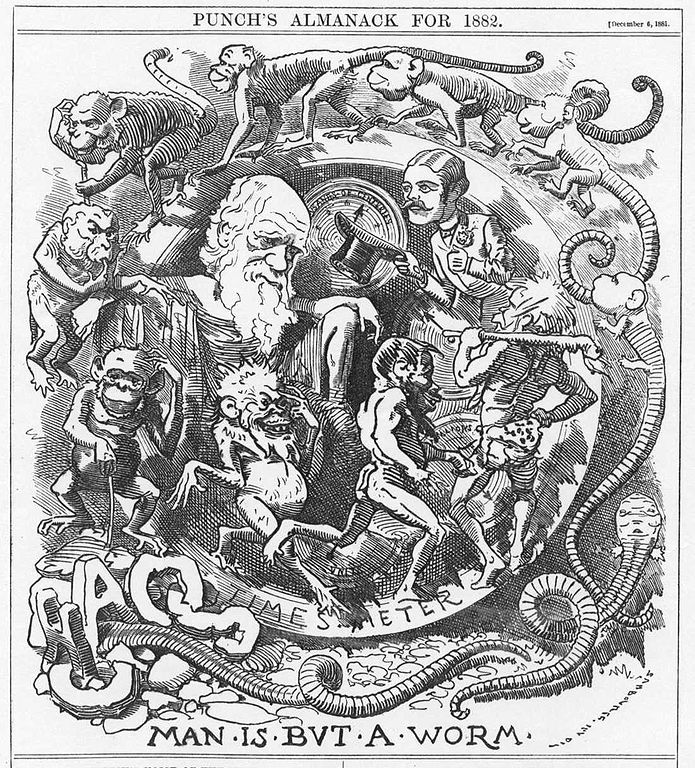
Darwin worm

“Caricature of Darwin’s theory in the Punch almanac for 1882, published at the end of 1881 when Charles Darwin had recently published his last book, The Formation of Vegetable Mould Through the Action of Worms.–Via Wikipedia.

After more than 150 years of its publication, Charles Darwin’s The Origin of Species draws a lot of debate. More often than not these debates are unfortunate; many of them should not even exist, especially if we take into account that Darwin cleared many of its nuances in a few passages at the beginning of his now classic book. The following is a short passage that accounts for Darwin’s response to the remarks that were very common in regards to his theory; remarks that are still common today, and show an utter disregard to scientific literacy:

“This preservation of favourable individual differences and variations, and the destruction of those which are injurious, I have called Natural Selection, or the Survival of the Fittest. Variations neither useful nor injurious would not be affected by natural selection, and would be left either a fluctuating element, as perhaps we see in certain polymorphic species, or would ultimately become fixed, owing to the nature of the organisms and the nature of the conditions.

Several writers have misapprehended or objected to the term Natural Selection. Some have even imagined that natural selection induces variability, whereas it implies only the preservation of such variations as arise and are beneficial to the being under its conditions of life. No one objects to agriculturists speaking of the potent effects of man’s selection; and in this case the individual differences given by nature, which man for some object selects, must of first necessity occur. Others have objected that the term selection implies conscious choice in the animals which become modified; and it has even been urged that,as plants have no volition, natural selection is not applicable to them! In the literal sense of the word, no doubt, natural selection is a false term; but whoever objected to chemists speaking of the elective affinities of the various elements?–and yet an acid cannot strictly be said to elect the base with which it in preference combines. It has been said that I speak of natural selection as an active power or Deity; but who objects to an author speaking of the attraction of gravity as as ruling the movements of the planets? Everyone knows what is meant and is implied by such metaphorical expressions; and they are almost necessary for brevity. So again it is difficult to avoid personifying the word Nature, only the aggregate  action and product of many natural laws, and by laws the sequence of events as ascertained by us. With a little familiarity such superficial objections will be forgotten.”–[Pages 94-95 of The Origin of Species by Means of Natural Selection or the Preservation of Favoured Races in the Struggle for Life]

The Voyagers (Penny Lane, 2010) — Science Club Blog Post I.

The Sounds of Earth

The Sounds of Earth.

“The Most Distant, Man Made Objects in Space”

“In the summer of 1977, NASA sent Voyager 1 and Voyager 2 on an epic journey into interstellar space. The spacecraft were only expected to last two years, and yet, they may one day be all that remains of humanity. Each of the Voyager probes carries a golden record, a compilation of images and sounds meant to represent our planet to any distant civilizations that should encounter them. “The launching of this bottle into the cosmic ocean says something very hopeful about life on this planet,” said Carl Sagan, the golden record’s co-creator. Sagan met and fell madly in love with his future wife Annie Druyan while working on the golden record. The project became their love letter to humankind and to each other. This film is likewise a love letter, to Sagan and Druyan, and to the transcendence and heartache of the space age. And also to love itself, which always requires risky voyaging of one kind or another.

Director’s Biography:

Penny Lane has been making award-winning documentaries and essay films since 2002. Her first feature documentary, Our Nixon, world premiered at Rotterdam, had its North American premiere at SXSW, and was selected as the Closing Night Film at New Directors/New Films. Her short films have screened at Rotterdam, AFI FEST, Hot Docs, Full Frame, Rooftop Films, MoMA’s Documentary Fortnight and many other venues. She was named ‘Most Badass!’ at the Iowa City Documentary Film Festival in 2009. She is currently an Assistant Professor in the Department of Art and Art History at Colgate University and yes, Penny Lane is her real name.”–Penny Lane (Via Aeon Film).


Last post of Sem. I (2013) of Bio: a Recap

This blog post is an illustrated review/outline of the first semester of Biology. Images taken from the web will show the most important topics discussed during this semester. These images will prompt you to ‘retrieve’ answers from knowledge gathered during the semester; and relate that knowledge to the images shown. I will ask you questions regarding the images, which are questions that have been discussed at some point during the semester; also, these questions are aligned with the outlines/reviews uploaded to your Edline Bio pages (AP Biology and 10th grade Biology).

I. Life: an introduction

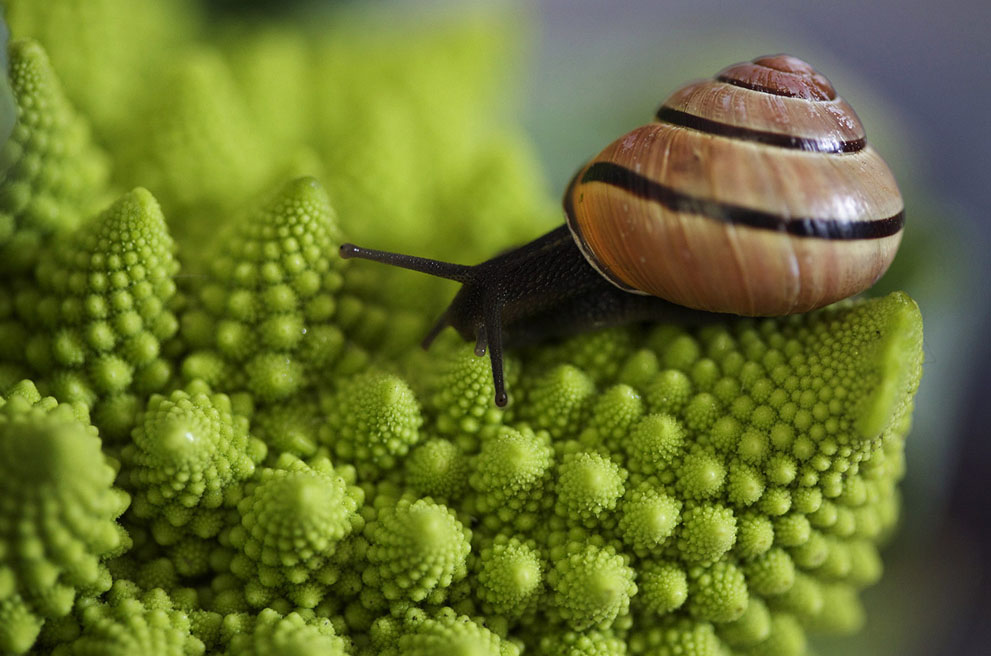
Spirals the brocoli and the snail

What is emergence? Why is this concept so important in Biology? Why spirals are good metaphors to understand emergence?

Taxonomy

Why classification is important in Biology?

DNA

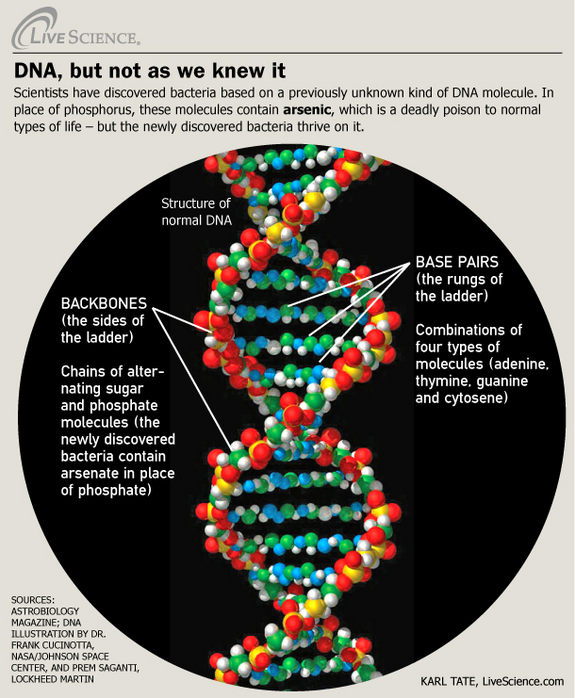
What is a gene?

SARS

Why are viruses considered ‘biological entities’ and not organisms? What does this tells us about the characteristics of life?

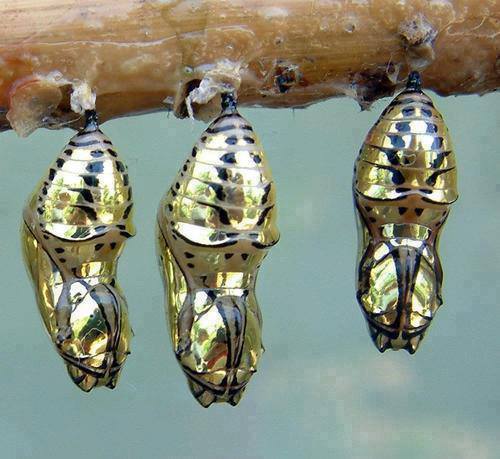
Metallic chrysalis

How is this image an example of homeostasis?

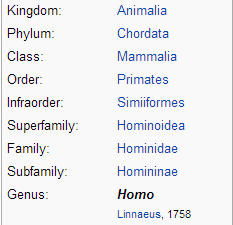
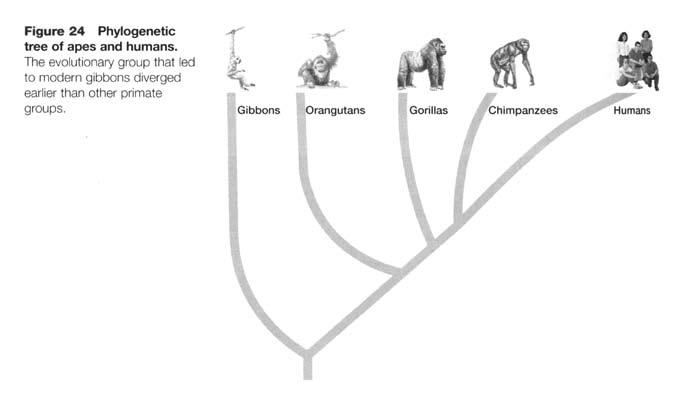
Common Ancestry II

Briefly explain the concept ‘common ancestry’ with this image.

Scientific Method II

Why the scientific method should be understood as cyclical and not lineal? Image via Ars Technica.

II. Life and Chemistry

electrons

What is matter? What is an atom? Why are valence electrons important to understand the nature of compounds?

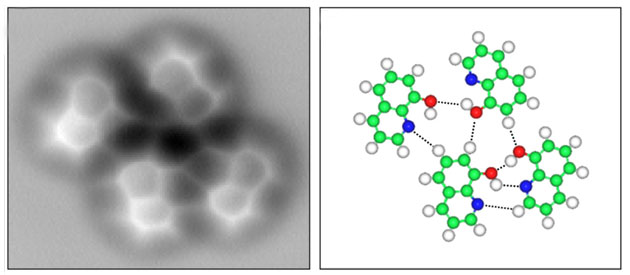
Hydrogen Bond visualization

This image is both: a model and an electron microscope image of a chemical (real) phenomenon. What event is illustrated here? Why is this event so important for life?

Proteus

This image is an artist’s representation of an ancient greek god called Proteus. He was able to morph into any shape he desired. What molecule of life does this image remind you of?

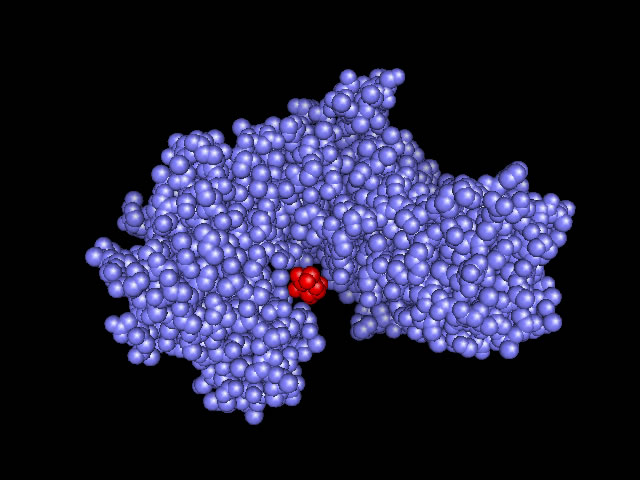
This is a 3D filled model of an enzyme called Hexokinase. Why are proteins important for life?

This is a 3D filled model of an enzyme called Hexokinase. Why are proteins important for life?

This image is a carbon allotrope known as a fullerene. Why carbon is important for life?

This image is a carbon allotrope known as a fullerene. Why carbon is important for life?

III. The Cell

What is the etymology of the word 'Eukarya'?

What is the etymology of the word ‘Eukarya’?

Why cells cannot be the size of an elephant?

Why cells cannot be the size of an elephant?

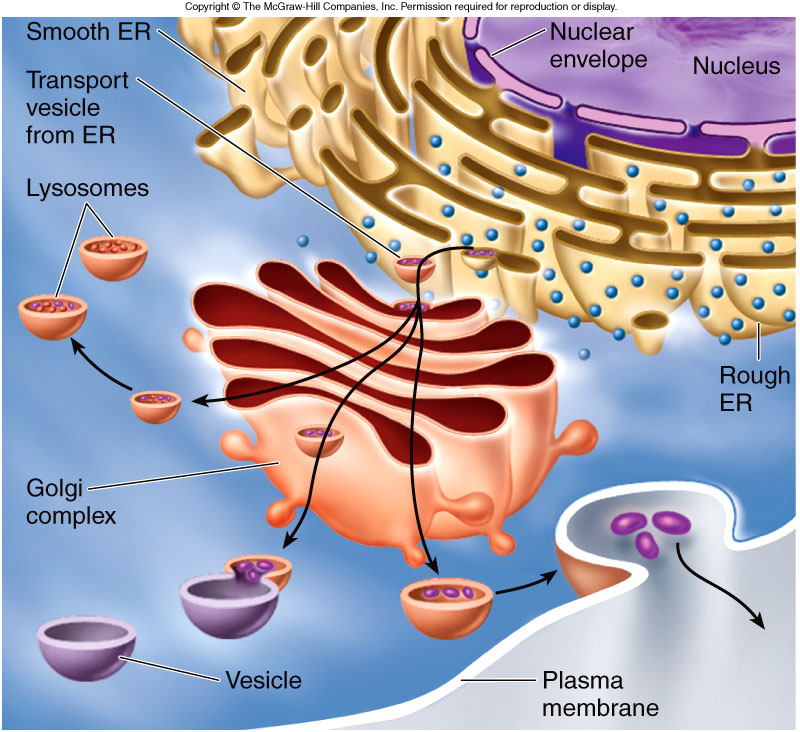
How is this arrangement of organelles called?

How is this arrangement of organelles called?

What is an 'endosymbiotic relationship'?

What is an ‘endosymbiotic relationship’?

What is this image? What type of microscope was used to magnify this structure?

What is this image? What type of microscope was used to magnify this structure?

IV. Diffusion & Osmosis

Refer to the blog post of October 30, 2013 titled: Diffusion and Osmosis (via Khan Academy)

V. Metabolism

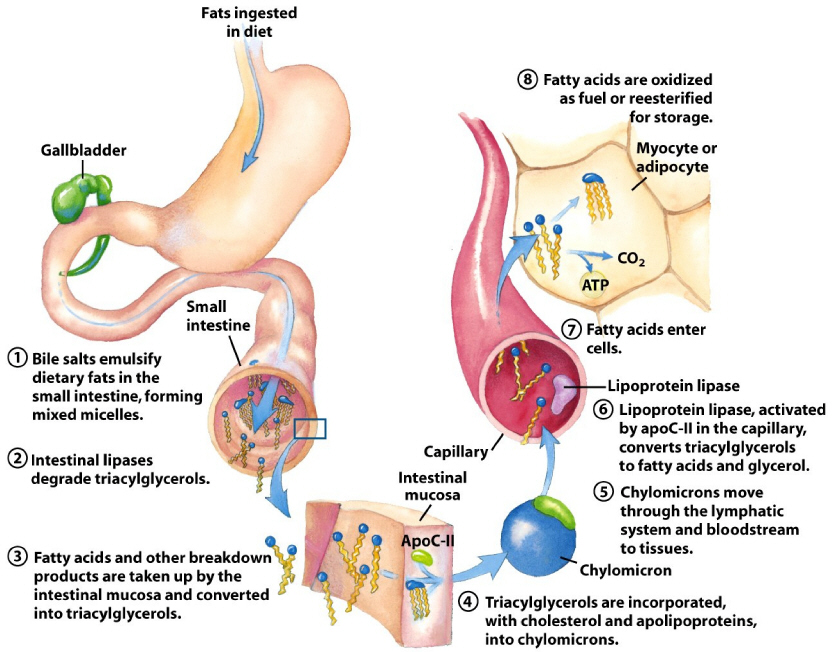
What type of metabolic pathway is illustrated here?

What type of metabolic pathway is illustrated here?

What is energy? What is entropy? How the definitions of 'energy' and 'entropy' can be related to the Laws of Thermodynamics?

What is energy? What is entropy? How the definitions of ‘energy’ and ‘entropy’ can be related to the Laws of Thermodynamics?

VI. Cellular Respiration & Photosynthesis

For this topic, refer to the following blog posts:

Glycolysis, or how cells break down carbohydrates

The Citric Acid Cycle (via Khan Academy).

Photosynthesis web kit.

How Evolution Works: An Animation via Brain Pickings

Darwin Comic

Snapshot from a graphic novel of Charles Darwin’s life.

The following animation–via the very resourceful blog, Brain Pickings–illustrates the general workings of a theory that will be addressed next semester, the theory of evolution. This animation of about 12 minutes, is simple, funny and insightful.

Photosynthesis web kit.

Photons

Photons, which can excite chlorophyll in thylakoid membranes, have peculiar properties that will revolutionize how we’ll use computers in the next few decades: “Data can be encoded in light pulses by modulating the amplitude or phase of the light. Single photons and other quantum light states can also be generated in a variety of complex shapes and encoding information in these different shapes could be an efficient way to securely transmit data. Indeed, a single photon shape could represent, for example, any letter in the alphabet, or even a quantum combination (or superposition) of several letters.” — Via

The following videos and links are good resources for the study of Photosynthesis–especially light dependent & light independent reactions (a.k.a. carbon fixation; a.k.a. The Calvin Cycle). 

Light dependent reactions video, via Khan Academy:


Light dependent reactions summary, via McGraw Hill: link here.

****

The Calvin Cycle video, via Khan Academy: 


Calvin Cycle summary, via McGraw Hill: link here.


The Citric Acid Cycle (via Khan Academy)

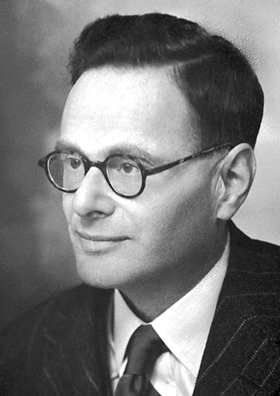
Hans_Adolf_Krebs

“Hans Adolf Krebs received the Nobel Prize in Physiology for his “discovery of the citric acid cycle.” He was knighted in 1958.”–Via Wikipedia. Now you can put a face to the architect of your biochemical nightmares during this week.  

Just when you think you’re out of the woods after Glycolysis–you say to yourself: “I can take a breather”–the Krebs Cycle (a.k.a. The Citric Acid Cycle, or the oxidation of citrate) makes its appearance.

It can be just as complex, if not more, than Glycolysis. But the main thing that we have to take into account about this catabolic pathway–and catabolism of carbohydrates is all about accounting–is the redox reactions mediated by the enzymes of this pathway. This short animation should give us a brief review of how oxidation and reduction (redox) occur.

The following animation–embedded here via Khan Academy–shows a very good summary of the Citric Acid Cycle (notice the importance that the lecturer gives to “the big picture”, which in the Krebs Cycle means the enzyme regulated oxidation of a carbohydrate).

Glycolysis, or how cells break down carbohydrates.

Glycolysis

Glycolysis (via McGraw Hill: How Glycolysis Works)

Eons of emergent changes and mutations, aided by natural selection, have made it possible for cells to make efficient use of the available energy on this planet. And the source of this energy is the Sun.

With these two sentences we welcome what can be considered the hardest, and most despised, part of any Bio course: Cellular Respiration. Cells are powered by combustion; but these have to occur in a controlled way. Enzymes–a synchronized and highly complex cascade of enzymatic events– will manage this controlled release of energy. This process begins with Glycolysis. The following videos are very good explanations of how Glycolysis works. Keep in mind that these are complex events. They are summarized as best as possible, but some effort has to be put in order to understand them: