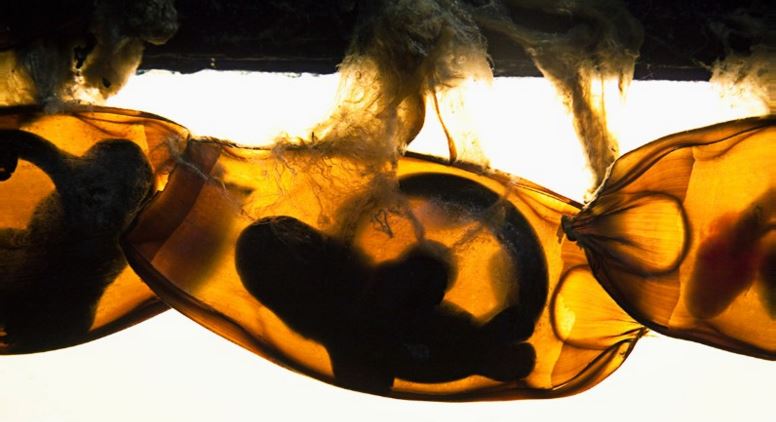
The white spotted bamboo shark has surprised ichthyologists (fish biologists) by doing something unexpected: a second generation of fishes reproducing without a male parent. This strange, sci fi-like way of reproducing is known as parthenogenesis.
Some animals, including Komodo dragons and domestic chickens, can sometimes produce offspring without copulating with a male. Females do this by using one of two methods to add an extra set of chromosomes to their eggs, producing either full- or half-clones of themselves. It had only been seen in captivity – until two virgin births were recently recorded in a wild sawfish and pit.
It was previously thought that parthenogenesis was extremely rare, occurring just once in a blue moon (especially in vertebrates). These findings show that reproduction without a male parent is much more common in nature than previously thought.
Food for thought (Answer and explain questions for extra credit)
Would the mother be considered haploid or diploid? Can parthenogenesis occur with high order vertebrates such as mammals?
These pictures have something to say about stuff I’ve said in class. All of them can be used to illustrate a summary of an introductory Bio course.
10 pictures. You can work on this post which ever way you like; but if your comment is a narrative about Biology, mentioning these images (at least 5 of them), it’ll be worth double. For example, if you have 3 comments at this point, you can finish your job by weaving a summary with these images.
The due date of your work has been updated to December 11th, 2015.
Happy Thanksgiving.
A model of HL Tau—a star
Rotors spinning with trillions of silicon particles—sand
A house at Big Sur, California. Water. Water is everything
Research the concept ‘exergonic’
A new born dolphin.
Research: ‘Plato’s Cave”
A hurricane in a jovian planet. Gassy planet—possibly methahe. #functionalgroup
Would life on Earth be possible without Photosystem II?
Open access peer review–What does this phrase mean?
Nowadays, with relative ease, citizens can become scientists, and scientists can become artists; all thanks to the ever-changing context of the Internet. We can crowd-source scientific research, meaning that scientists can use the web to gather data in unprecedented ways. This exchange of information between scientist and citizen—via blogs, social media, etc.—is helping scientists all over the world.
Andy Weir, novelist and software engineer, perfectly embodies this current trend: scientists using “open access peer review”. His intentions were experimental. He wanted to solve a problem regarding martian exploration. But this type of research resulted in the emergence of a best-seller book and a block buster film:
“I was sitting around thinking about how to do a human mission to Mars, not for a story but just for the heck of it,” says Weir. “I started thinking about how I would do it and all the things that could go wrong, and I realized it would make a great story. So I made up a protagonist and subjected him to all of it.”–Via
In other words, as far as science fiction films go, The Martian is a very accurate scientific narrative of survival. Many things go wrong during the never-ending battle for survival in our planet, imagine all the things that will not go our way in a place like Mars. And that’s precisely what Weir did: he imagined—as a software engineer, with all the tools that a scientifically literate mind has—all the scenarios that made The Martian so successful.
“Twelve orbits a day provide the Mars Global Surveyor MOC wide angle cameras a global “snapshot” of weather patterns across the planet. Here, bluish-white water ice clouds hang above the Tharsis volcanoes. This computer generated image was created by wrapping the global map found at PIA02066 onto a sphere.”–Via NASA
“2015” will appear on every mayor textbook as a significant year for scientific achievement. On October 5th, 2015 it was announced that there is unambiguous proof that brine (water with a lot of salt) flows on the martian surface during its warm months:
From the press conference that NASA gave a few days ago:
The dark, narrow streaks flowing downhill on Mars at sites such as this portion of Horowitz Crater are inferred to be formed by seasonal flow of water on modern-day Mars. The streaks are roughly the length of a football field.
The imaging and topographical information in this processed view come from the High Resolution Imaging Science Experiment (HiRISE) camera on NASA’s Mars Reconnaissance Orbiter.
These dark features on the slopes are called “recurring slope lineae” or RSL. Planetary scientists using observations with the Compact Reconnaissance Imaging Spectrometer on the same orbiter detected hydrated salts on these slopes at Horowitz Crater, corroborating the hypothesis that the streaks are formed by briny liquid water.
What does this mean for life? Does this discovery boosts expectations for martian life? Should we go up there? If so, what measures do we have to take once we reach these salty slopes?
“Knowing the structure of a protein is key to understanding how it works and to targeting it with drugs. A small protein can consist of 100 amino acids, while some human proteins can be huge (1000 amino acids). The number of different ways even a small protein can fold is astronomical because there are so many degrees of freedom. Figuring out which of the many, many possible structures is the best one is regarded as one of the hardest problems in biology today and current methods take a lot of money and time, even for computers. Fold it attempts to predict the structure of a protein by taking advantage of humans’ puzzle-solving intuitions and having people play competitively to fold the best proteins.”–Via
Fold It is a science-based puzzle game developed by biochemists. It is basically crowdfunded science–anyone can play the game; and, by completing an increasingly complex set of protein puzzles, you are contributing to ongoing scientific research, that can lead to the possible cure of cancer, AIDS, and many other diseases. We will use this game to study properties of proteins, how they behave, and the mechanics behind the chemical interactions that make them possible.
The first thing we have to do is to download the game here. (Keep in mind that Java applets have to be updated for the game to work on your device). After downloading the file, create an account. Once the account has been created and you are logged in, click this link, which is the group page of this lab; here you will click on ‘request membership‘. I’ll keep track of your progress in the game as an administrator of the group. The assignment will be completed once you unlock four achievements: sidechains, backbone packing, hydrogen bonding, hydrophobics and hydrophillics.
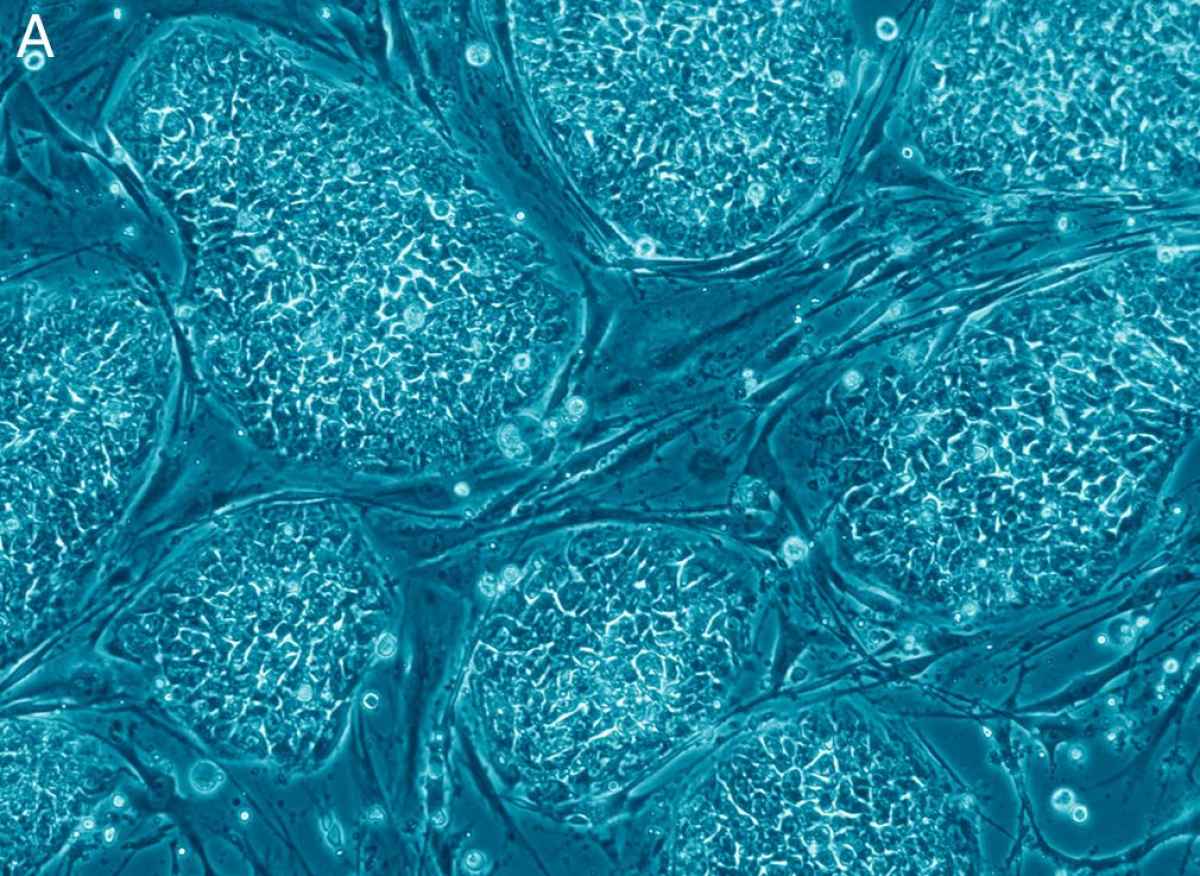
Reddit can be a very powerful tool if used properly. The site has a recurrent series called AMA (“ask me anything”). World leaders, artists, and prominent figures have been featured here. For our purposes, which are Biology related, I’ll share with you a recent Science AMA. Matt Thompson, a scientist from San Francisco California, wanted to understand how STEM cells specialize—with the hopes of one day directing their fates via lasers. Scientists are using lasers, 3D printing technologies, and stem cells to usher in a future that was only possible in the world of science fiction.
Imagine a day when researchers can illuminate a bath of undifferentiated stem cells with a pattern of different colors of light and come back the next day to find a complex pattern of blood and nerve and liver tissue forming an organ.
From Matt Thompson’s Lab:
Matt’s graduate research at Harvard University focused on understanding cell fate decisions in response to developmental signals. Currently, he is exploring cellular decisions that occur in cell populations, for example, within tissues of a developing organism or within our immune system. How do large numbers of progenitor cells within a developing organism exchange information and coordinate their state to construct a complex tissue? What are the rules that organize multi-cellular phenomena and how are these rules implemented in molecular circuits that operate in single cells? He is using a combination of approaches including mathematical models, statistical analysis of high-throughput gene expression data, and single cell RNA sequencing experiments. His current work is reconstituting a set of developmental processes in the lab using mouse embryonic stem cell differentiation and developing imaging methods for tracking and perturbing the activity of signaling pathways and transcriptional regulators in many single cells at once. Matt will use this data with computational models to classify mechanisms used by tissues to develop and repair themselves without centralized control.–Via
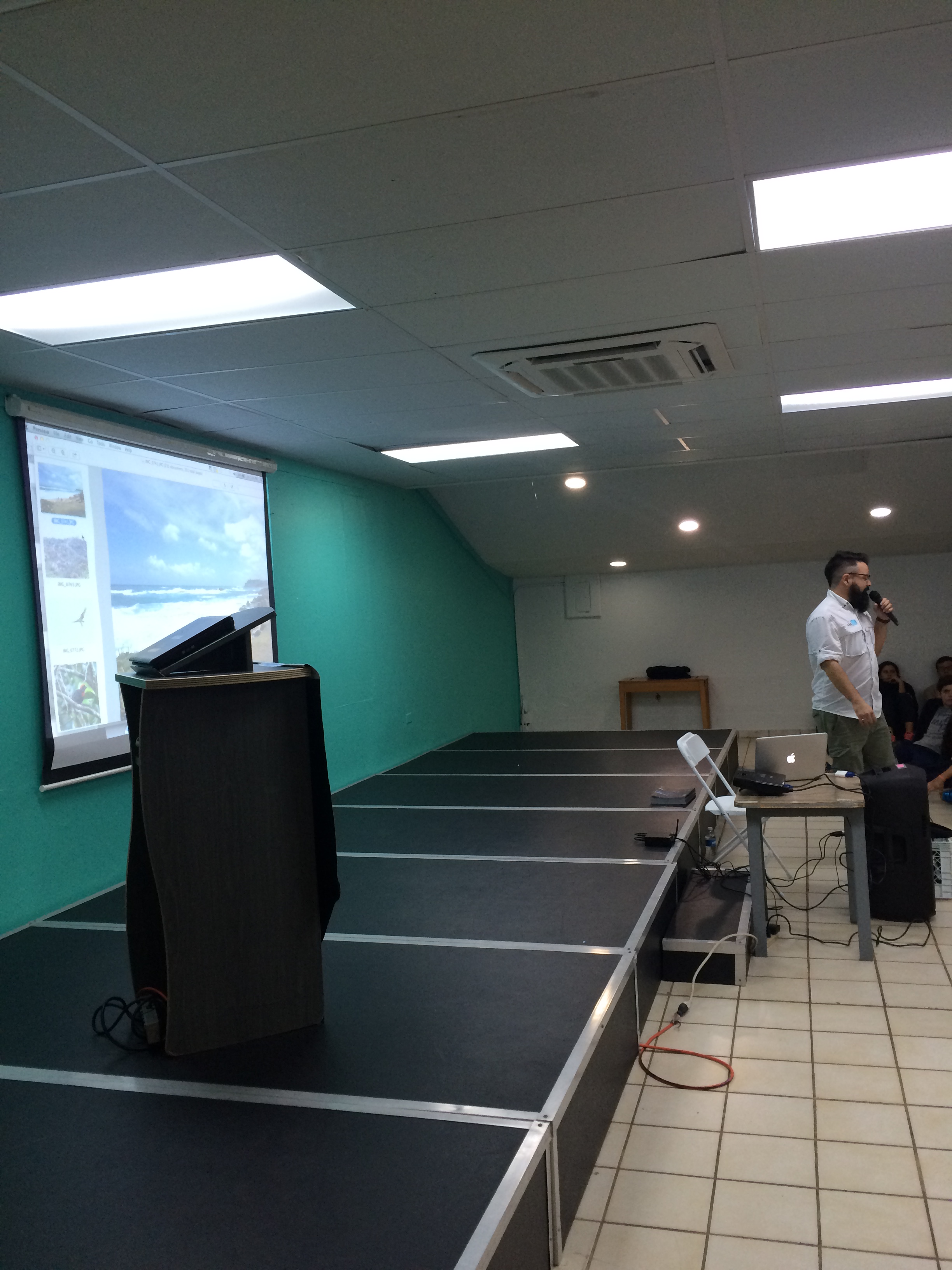
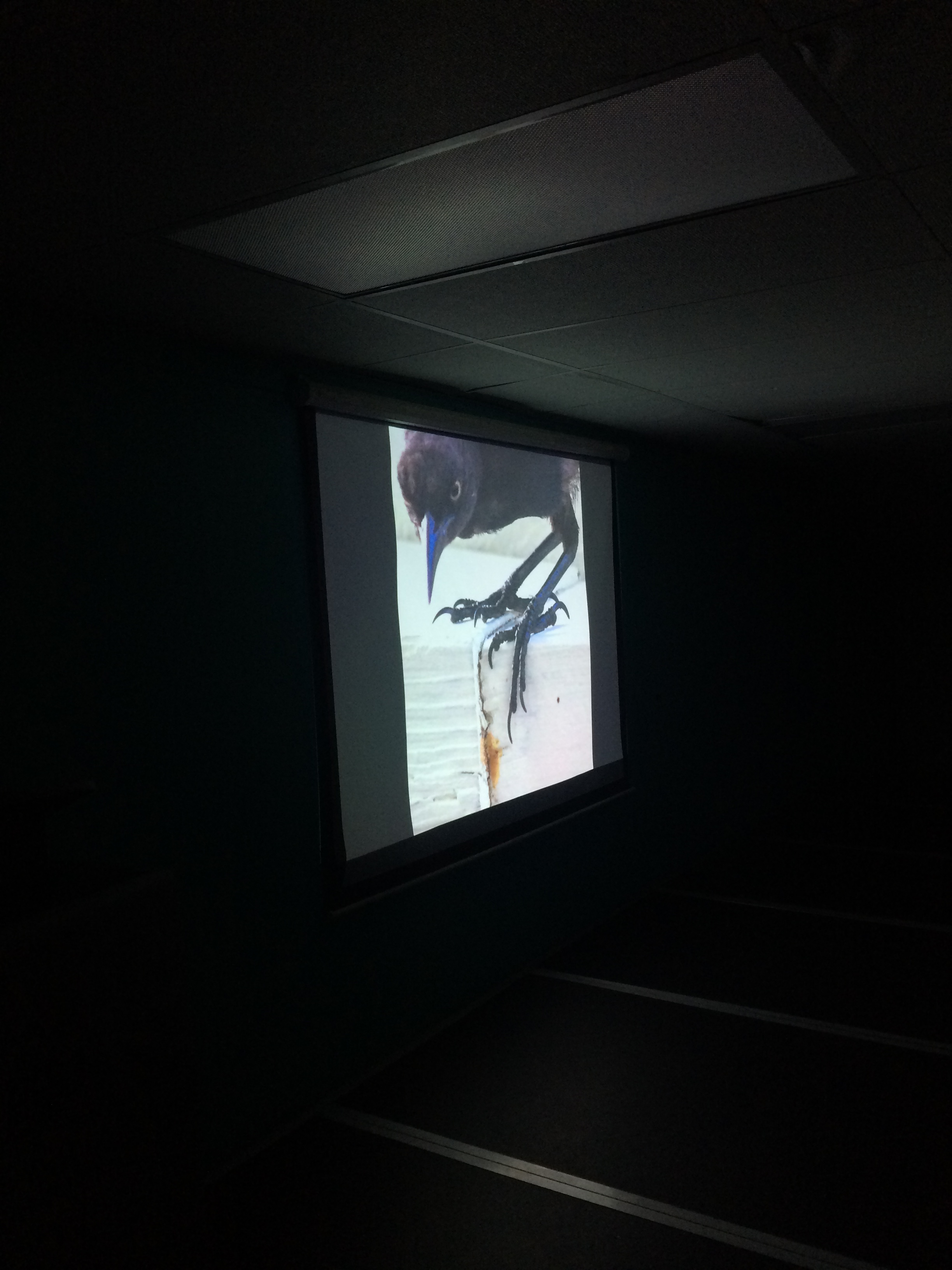
Javier Román-Nieves is a puertorrican artist that loves nature. Among many other things (he’s also a writer and a citizen scientist) Román takes pictures of puertorrican fauna, especially birds. Last April, we had the opportunity to see just a few of his pictures. They put into perspective that we are living in an island; birds from as far away as Alaska stop here to mate. His work speaks volumes of what has been known for a century and a half: species evolve; and islands are perfect places to show this.
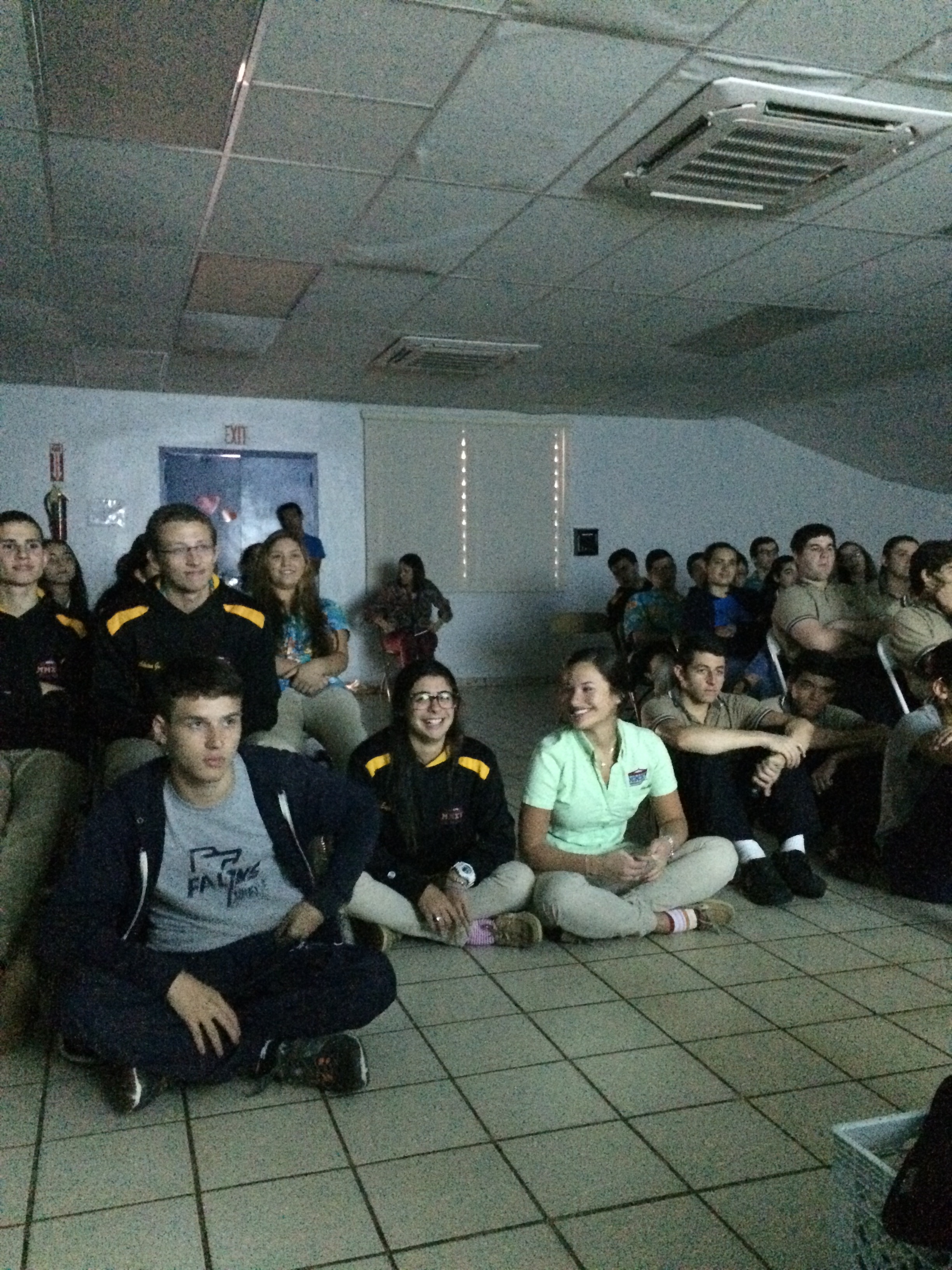
Students from 10th and 12th grade saw some of his pictures. They also participated in a conversation with the artist (he spent time with them totally free of charge).
For more information on Javier’s work, you can click here.
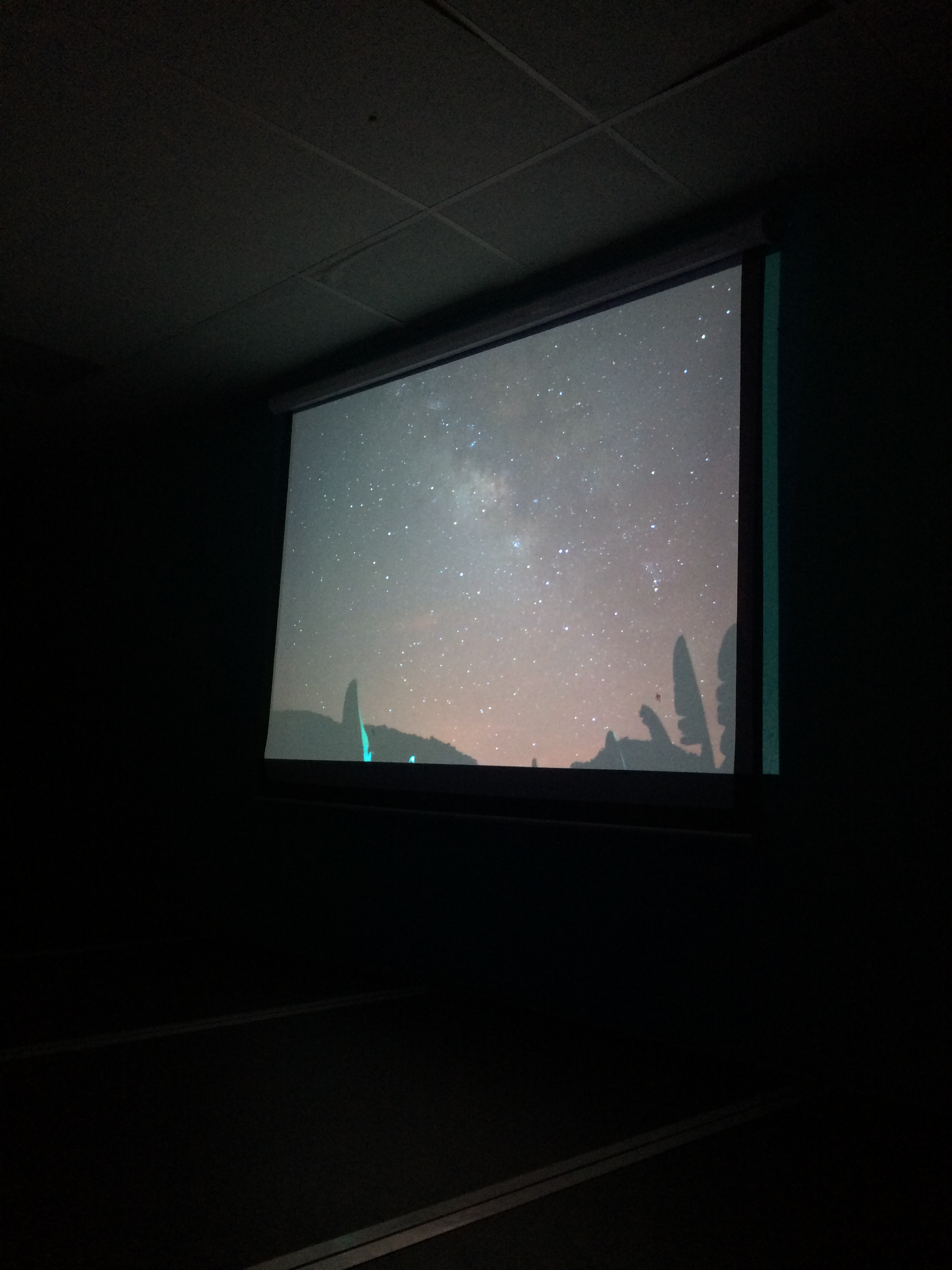
This one is from Utuado. You can see one arm of our galaxy very clearly.
Students from 10 & 12 experienced Javier’s candid personality, while learning a lot about natural wonders hidden in plain sight, especially in cities.
Careful observations of the legs of this bird show that birds and dinosaurs share common ancestry.
Javier’s work can be accessed through social media. His instagram account is @starsbirdsandcities.
He’s also involved in the publication of his book, Sounds of Watching. The following video tells the story of how the project has been in development for the last two years:
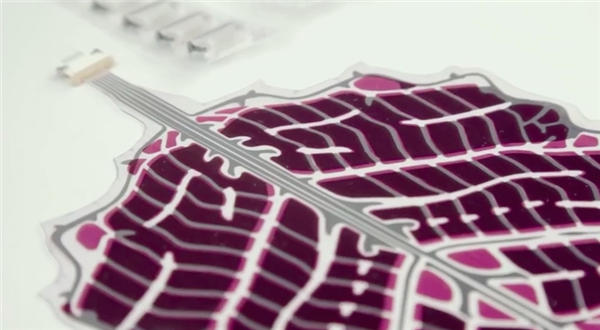
Scientists in Finland—using 3D printers and photoelectric tech—created a novel way of harvesting energy. Via GOOD:
Here’s a prototype worth getting excited about: scientists at the VTT Technical Research Centre of Finland have developed a “tree” that harvests energy. They are 3D printed, and, according to the manufacturer, can collect power in a number of ways. The leaves are “printed organic solar cells,” generating electricity not only from sunlight, but wind and temperature changes as well. The leaves, which each have their own power converters, can be used to power small electronic devices such as mobile phones and LED lights.
“A black hole that grew to gargantuan size in the Universe’s first billion years is by far the largest yet spotted from such an early date, researchers have announced.”–Via
We’ve discussed the Cosmos in our Bio class. Human beings are part of it, and can be aware of many things in it—which include stars, photons, bacteria, and plants. Everything is the Cosmos, but only we, with our huge and strange brains, are aware of it. Science helps us deal with this strange condition that puts us in a weird, but exciting situation: being aware of how infinitely small and how infinitely big things can get. This is why I’ve decided to update the blog with the Galaxy Song, by the comedy group Monty Python. The song was part of the soundtrack of the 1983 film Monty Python’s The Meaning of Life (1983):
(spoken)
Whenever life gets you down, Mrs. Brown,
And things seem hard or tough,
And people are stupid, obnoxious or daft,
(sung)
And you feel that you’ve had quite eno-o-o-o-o-ough,
Just remember that you’re standing on a planet that’s evolving
And revolving at 900 miles an hour.
It’s orbiting at 19 miles a second, so it’s reckoned,
The sun that is the source of all our power.
Now the sun, and you and me, and all the stars that we can see,
Are moving at a million miles a day,
In the outer spiral arm, at 40,000 miles an hour,
Of a galaxy we call the Milky Way.
Our galaxy itself contains a hundred billion stars;
It’s a hundred thousand light-years side to side;
It bulges in the middle sixteen thousand light-years thick,
But out by us it’s just three thousand light-years wide.
We’re thirty thousand light-years from Galactic Central Point,
We go ’round every two hundred million years;
And our galaxy itself is one of millions of billions
In this amazing and expanding universe.
(waltz)
Our universe itself keeps on expanding and expanding,
In all of the directions it can whiz;
As fast as it can go, at the speed of light, you know,
Twelve million miles a minute and that’s the fastest speed there is.
So remember, when you’re feeling very small and insecure,
How amazingly unlikely is your birth;
And pray that there’s intelligent life somewhere out in space,
‘Cause there’s bugger all down here on Earth!
Here’s an illustrated version of the song, put together by Phillip Harrington, for his undergraduate astronomy classes at Suffolk County Community College on Long Island :
The nano-scale ceramic marble represents a cell. This nano machine is a hundred times thinner than a single human hair.
The XXIst century promises great technological leaps in the fields of biotechnology and genetic engineering—possibly bringing us the dystopies we’ve seen in films like GATTACA (Niccol, 1997). That’s the worst case scenario, of course. Best case scenario, cancer research—one example of many—will greatly benefit from tools such as the one described in this blog post:
Nanoinjectors provide scientists with unprecedented ways of manipulating genetic material, thus getting us closer to the promise of Biotechnology, which was first hinted at with the mapping of the Human Genome, during the last decade of the XXth Century:
The ability to transfer a gene or DNA sequence from one animal into the genome of another plays a critical role in the medical research of diseases such as cancer, Alzheimer’s and diabetes.
But the traditional method of transferring genetic material into a new cell, microinjection, has a serious downside. This method uses a hollow needle to pump a DNA-filled liquid into an egg cell nucleus, but that extra fluid causes the cell to swell and die 40 percent of the time.
Now a multidisciplinary team of Brigham Young University scientists has developed a way to significantly reduce cell death when introducing DNA into egg cells. The researchers have created a microscopic lance that delivers DNA to the cells through electrical forces.—Via
DNA is fragile. This means that scientists need ways to very carefully handle these molecules. The following images, taken from the primary source of this blog post, show how the lance works. You can also watch a video of the process below:
More information about these types of technologies can be found here.
5 point bonus question for AP and 10H Bio students*:
Knowing what we know about the structure of DNA, explain the following passage:
“”Because DNA is naturally negatively charged, it is attracted to the outside of the lance using positive voltage,” said Brian Jensen, BYU professor of mechanical engineering.””
What part of the DNA molecule accounts for its “negatively charged” feature?
*To receive full credit, you have to answer the bonus question below.








 The Hypertextual Lounge


You must be logged in to post a comment.