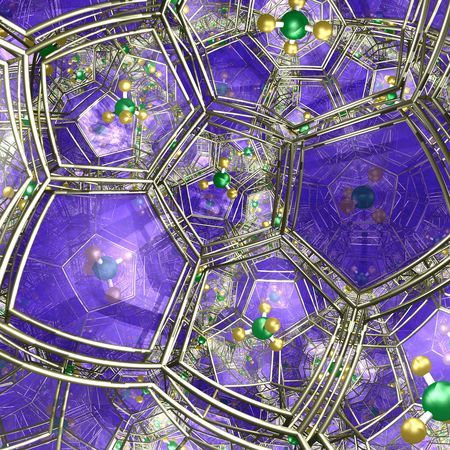
“Only under the right conditions does nature produce methane hydrates, fuel trapped in ice crystals. [T]he environment must be extremely cold and wet, and under relatively high pressure. And there must be methane. The simplest, and most purely refined hydrocarbon, methane consists of one carbon atom surrounded by four hydrogen atoms. The methane is formed when organic material is broken down, either by heat or by microbes, in an oxygen-poor environment.”–Via
Welcome to a new school year.
This first post will account for introductory concepts for Chemistry, the natural science that studies matter. Any proper Bio course has to discuss Chemistry; we are living beings made out of star stuff, aware of what makes us, so let’s see what important topics from Chemistry we need to understand what makes us alive.
Two Youtube Channels will be very important throughout the school year: Crash Course and Khan Academy. For this our introduction to Bio, we’ll use Crash Course Chemistry. If we want to understand what makes the physical world possible, we need to consider the science that studies the nature of matter. The following videos will show you what Chemistry is all about. Very simply put, Chemistry is the story of how protons, electrons and neutrons came together to make everything–stars, bacteria, gold–possible:
Now that you’ve watched these videos, which account for a very brief summary of what chemistry is, we can now discuss what probably is the most important chemical compound for life in our planet: water. The following videos describe how important water is. We’ve already discussed in class the properties of water; but these properties owe their existence to the chemical configuration of this unique molecule, made out of very simple and abundant elements:
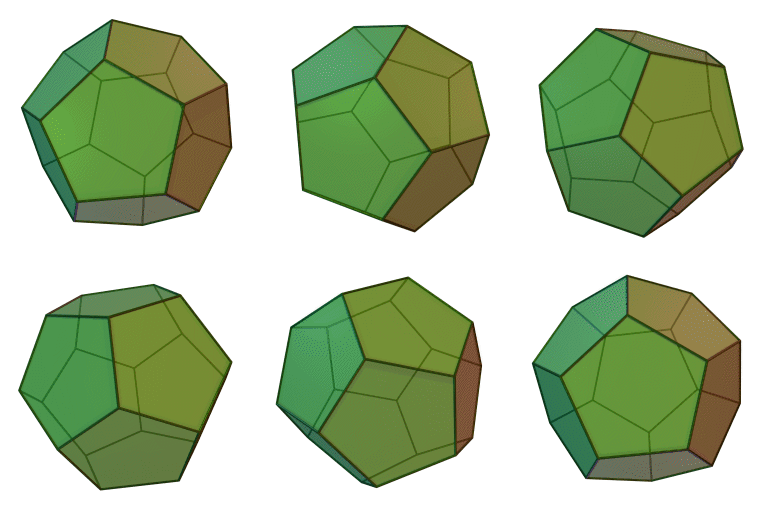
“By ordering the solids correctly—octahedron, icosahedron, dodecahedron, tetrahedron, cube—Kepler found that the spheres could be placed at intervals corresponding (within the accuracy limits of available astronomical observations) to the relative sizes of each planet’s path, assuming the planets circle the Sun. Kepler also found a formula relating the size of each planet’s orb to the length of its orbital period: from inner to outer planets, the ratio of increase in orbital period is twice the difference in orb radius. However, Kepler later rejected this formula, because it was not precise enough.”–Via
Platonic solids, as ideas and concepts, have been with us ever since Plato decided to tell an origin story of the universe. Plato’s universe originated with a master craftsman, a demiurge, that created the essential elements that make up reality, ourselves included:
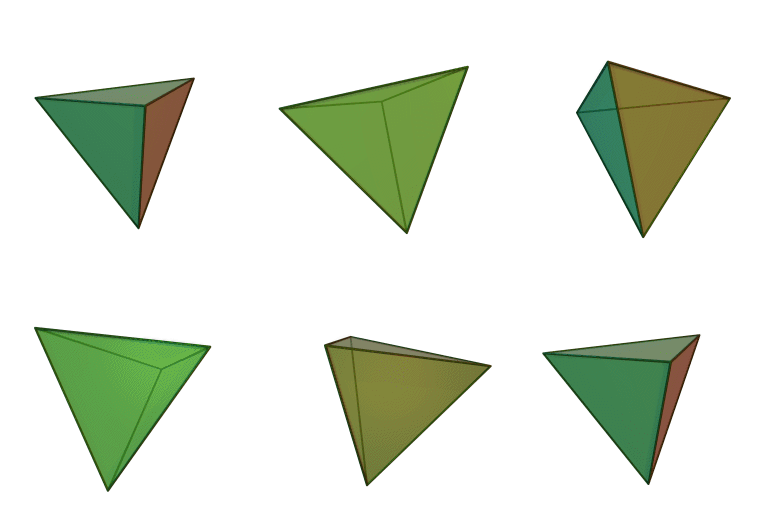
“[T]he Craftsman begins by fashioning each of the four kinds “to be as perfect and excellent as possible…” (53b5–6). He selects as the basic corpuscles (sômata, “bodies”) four of the five regular solids: the tetrahedron for fire, the octahedron for air, the icosahedron for water, and the cube for earth.”–Via Stanford Encyclopaedia of Philosophy
These polyhedra are everywhere. If you’re aware of crystals and how they form in nature, you’ve come across platonic solids. Also, with just a few minutes of proper web research, you’ll find that many microscopic organisms, including many species of algae, may have one of the following shapes (Captions are linked to examples of platonic solids):
“Since silicon is the most common semiconductor used in solid-state electronics, and silicon has a valence of four, the tetrahedral shape of the four chemical bonds in silicon is a strong influence on how crystals of silicon form and what shapes they assume.”–Tetrahedrons in electronics (Wikipedia)
“[A] completely symmetrical structure can always keep the walking capability when any of its six faces of the hexahedron touches the ground.”–Application in robotics, via.
Nowadays, we all know that there are many more elements that make up the physical world; nevertheless, 2000 years after Plato’s Timaeus–the text that the previous quote was taken from–, these figures have been observed outside Plato’s mind. Take the example of the carbon allotrope known as a fullerene:
An isochaedron shaped fullerene.
Made out of 540 carbons, this allotrope–or “alternative form”, diamonds are ‘allotropes’ of carbon–has the shape of an isochaedron, our last platonic solid. These molecules have many useful applications, including nanotechnology and biomedical research.
Viruses, biological entities that blur the line between living and nonliving, also exhibit isochaedral shapes. The outer protein shell of many viruses–including HIV and herpes–are regular polyhedrons. And, in many cases, these polyhedrons are isochaedrons:
“Schematic diagram (left) and cryoreconstruction (right) of the ssRNA insect virus FHV (family Nodaviridae). The capsid of FHV consists of 180 copies of a single subunit arranged with T=3 icosahedral symmetry.”
All of these are but a very miniscule sample of what science can be. They’re not, by far, all of what science entails. This said, we have to address science critically, philosophically, and with humanistic sensibilities.
Today we’ll talk about a very important topic in science: ethics. Science can open our minds; it can empower us to strive against chaos. But, unfortunately, this human endeavor has been used to commit atrocities.
Will it happen again? Could we avoid the perils of science without ethical considerations? These questions should be part of any scientific curriculum. And the study of recent history provides perspective on the topic.
The Milgram experiment on obedience to authority–done in 1961–was a series of experiments conducted at Yale University, by psychologist Stanley Milgram. This experiment was done a few months after the trial of a Nazi war criminal called Adolf Eichmann. The purpose of the experiment was to answer the following questions: “Could it be that Eichmann and his million accomplices in the Holocaust were just following orders? Could we call them all accomplices?”
The following video is an update to the experiment:
Milgram faced a lot of criticism because of his experiment. Many respected researchers believed that it was unethical.
What do you believe? Is it unethical? Does the experiment teaches us something about human nature? If so, what lessons would these be?
The following quote was taken from Milgram’s 1974 article, The Perils of Obedience. It addresses the results of the experiment; results that deal with the aforementioned questions:
The legal and philosophic aspects of obedience are of enormous importance, but they say very little about how most people behave in concrete situations. I set up a simple experiment at Yale University to test how much pain an ordinary citizen would inflict on another person simply because he was ordered to by an experimental scientist. Stark authority was pitted against the subjects’ [participants’] strongest moral imperatives against hurting others, and, with the subjects’ [participants’] ears ringing with the screams of the victims, authority won more often than not. The extreme willingness of adults to go to almost any lengths on the command of an authority constitutes the chief finding of the study and the fact most urgently demanding explanation.
Ordinary people, simply doing their jobs, and without any particular hostility on their part, can become agents in a terrible destructive process. Moreover, even when the destructive effects of their work become patently clear, and they are asked to carry out actions incompatible with fundamental standards of morality, relatively few people have the resources needed to resist authority
After watching and discussing the video, ask yourself the following question: What type of person are you: the one that goes all the way to the lethal shock, or the one who stops and questions authority?
I’ve found info on Octopus paxarbolis, a cephalopod whose plight has been totally ignored by the scientific community. I hope that you take action and help this magnificent animal survive our human hubris.
“The Pacific Northwest tree octopus (Octopus paxarbolis) can be found in the temperate rainforests of the Olympic Peninsula on the west coast of North America. Their habitat lies on the Eastern side of the Olympic mountain range, adjacent to Hood Canal. These solitary cephalopods reach an average size (measured from arm-tip to mantle-tip,) of 30-33 cm. Unlike most other cephalopods, tree octopuses are amphibious, spending only their early life and the period of their mating season in their ancestral aquatic environment. Because of the moistness of the rainforests and specialized skin adaptations, they are able to keep from becoming desiccated for prolonged periods of time, but given the chance they would prefer resting in pooled water.
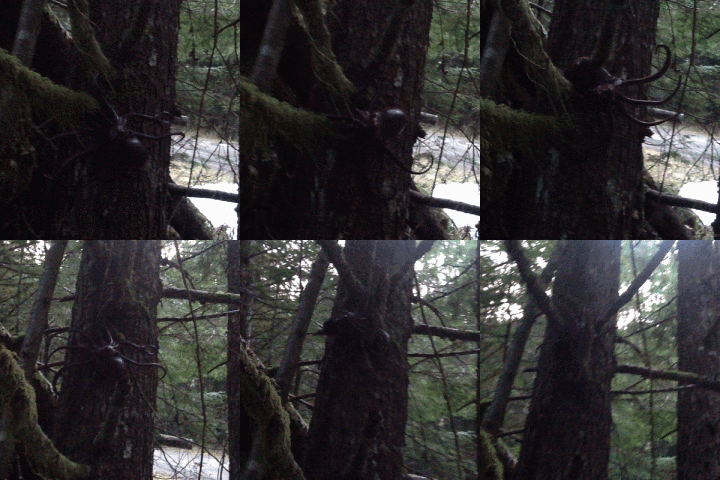
Notice the athletic prowess of Octopus paxarbolis, brilliantly captured by an amateur photographer, who’s also a park ranger.
An intelligent and inquisitive being (it has the largest brain-to-body ratio for any mollusk), the tree octopus explores its arboreal world by both touch and sight. Adaptations its ancestors originally evolved in the three dimensional environment of the sea have been put to good use in the spatially complex maze of the coniferous Olympic rainforests. The challenges and richness of this environment (and the intimate way in which it interacts with it,) may account for the tree octopus’s advanced behavioral development. (Some evolutionary theorists suppose that “arboreal adaptation” is what laid the groundwork in primates for the evolution of the human mind.)
Reaching out with one of her eight arms, each covered in sensitive suckers, a tree octopus might grab a branch to pull herself along in a form of locomotion called tentaculation; or she might be preparing to strike at an insect or small vertebrate, such as a frog or rodent, or steal an egg from a bird’s nest; or she might even be examining some object that caught her fancy, instinctively desiring to manipulate it with her dexterous limbs (really deserving the title “sensory organs” more than mere “limbs”,) in order to better know it.
The natural predator of paxarbolis is the hawk.
Tree octopuses have eyesight comparable to humans. Besides allowing them to see their prey and environment, it helps them in inter-octopus relations. Although they are not social animals like us, they display to one-another their emotions through their ability to change the color of their skin: red indicates anger, white fear, while they normally maintain a mottled brown tone to blend in with the background.
The reproductive cycle of the tree octopus is still linked to its roots in the waters of the Puget Sound from where it is thought to have originated. Every year, in Spring, tree octopuses leave their homes in the Olympic National Forest and migrate towards the shore and, eventually, their spawning grounds in Hood Canal. There, they congregate (the only real social time in their lives,) and find mates. After the male has deposited his sperm, he returns to the forests, leaving the female to find an aquatic lair in which to attach her strands of egg-clusters. The female will guard and care for her eggs until they hatch, refusing even to eat, and usually dying from her selflessness. The young will spend the first month or so floating through Hood Canal, Admiralty Inlet, and as far as North Puget Sound before eventually moving out of the water and beginning their adult lives.”
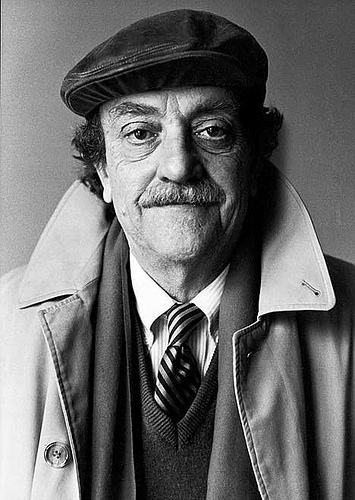
“What should young people do with their lives today? Many things, obviously. But the most daring thing is to create stable communities in which the terrible disease of loneliness can be cured.”–Kurt Vonnegut
Artists can be, although many times unwittingly, moral compasses for a lot of people. Mark Twain did this with his novels; he pointed out many of the vices of his time: slavery, racism, ignorance, etc. Kurt Vonnegut (1922–2007) did the same in the 20th century. His novels diagnosed many of the problems that we’re facing right now: unending status of warfare, science abuse, loneliness, etc.
The following letter, addressed to human beings of 2088, is an example of his ideas–plainspoken, endearing, and catastrophic ideas. It was part of an ad campaign by Volkswagen, to be printed in Time magazine during the late 80’s.
Ladies & Gentlemen of A.D. 2088:
It has been suggested that you might welcome words of wisdom from the past, and that several of us in the twentieth century should send you some. Do you know this advice from Polonius in Shakespeare’s Hamlet: ‘This above all: to thine own self be true’? Or what about these instructions from St. John the Divine: ‘Fear God, and give glory to Him; for the hour of His judgment has come’? The best advice from my own era for you or for just about anybody anytime, I guess, is a prayer first used by alcoholics who hoped to never take a drink again: ‘God grant me the serenity to accept the things I cannot change, courage to change the things I can, and wisdom to know the difference.’
Our century hasn’t been as free with words of wisdom as some others, I think, because we were the first to get reliable information about the human situation: how many of us there were, how much food we could raise or gather, how fast we were reproducing, what made us sick, what made us die, how much damage we were doing to the air and water and topsoil on which most life forms depended, how violent and heartless nature can be, and on and on. Who could wax wise with so much bad news pouring in?
For me, the most paralyzing news was that Nature was no conservationist. It needed no help from us in taking the planet apart and putting it back together some different way, not necessarily improving it from the viewpoint of living things. It set fire to forests with lightning bolts. It paved vast tracts of arable land with lava, which could no more support life than big-city parking lots. It had in the past sent glaciers down from the North Pole to grind up major portions of Asia, Europe, and North America. Nor was there any reason to think that it wouldn’t do that again someday. At this very moment it is turning African farms to deserts, and can be expected to heave up tidal waves or shower down white-hot boulders from outer space at any time. It has not only exterminated exquisitely evolved species in a twinkling, but drained oceans and drowned continents as well. If people think Nature is their friend, then they sure don’t need an enemy.
Yes, and as you people a hundred years from now must know full well, and as your grandchildren will know even better: Nature is ruthless when it comes to matching the quantity of life in any given place at any given time to the quantity of nourishment available. So what have you and Nature done about overpopulation? Back here in 1988, we were seeing ourselves as a new sort of glacier, warm-blooded and clever, unstoppable, about to gobble up everything and then make love—and then double in size again.
On second thought, I am not sure I could bear to hear what you and Nature may have done about too many people for too small a food supply.
And here is a crazy idea I would like to try on you: Is it possible that we aimed rockets with hydrogen bomb warheads at each other, all set to go, in order to take our minds off the deeper problem—how cruelly Nature can be expected to treat us, Nature being Nature, in the by-and-by?
Now that we can discuss the mess we are in with some precision, I hope you have stopped choosing abysmally ignorant optimists for positions of leadership. They were useful only so long as nobody had a clue as to what was really going on—during the past seven million years or so. In my time they have been catastrophic as heads of sophisticated institutions with real work to do.
The sort of leaders we need now are not those who promise ultimate victory over Nature through perseverance in living as we do right now, but those with the courage and intelligence to present to the world what appears to be Nature’s stern but reasonable surrender terms:
Reduce and stabilize your population.
Stop poisoning the air, the water, and the topsoil.
Stop preparing for war and start dealing with your real problems.
Teach your kids, and yourselves, too, while you’re at it, how to inhabit a small planet without helping to kill it.
Stop thinking science can fix anything if you give it a trillion dollars.
Stop thinking your grandchildren will be OK no matter how wasteful or destructive you may be, since they can go to a nice new planet on a spaceship. That is really mean, and stupid.
And so on. Or else.
Am I too pessimistic about life a hundred years from now? Maybe I have spent too much time with scientists and not enough time with speechwriters for politicians. For all I know, even bag ladies and bag gentlemen will have their own personal helicopters or rocket belts in A.D. 2088. Nobody will have to leave home to go to work or school, or even stop watching television. Everybody will sit around all day punching the keys of computer terminals connected to everything there is, and sip orange drink through straws like the astronauts.
Cheers,
Kurt Vonnegut
———————————-
The following video is an appropriate addition to this letter. In this 8 minute interview, author Alan Weissman addresses many of Vonnegut’s concerns:
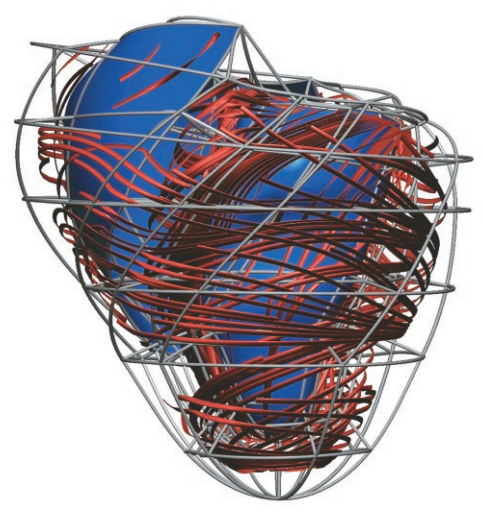
“Computer models of the heart incorporate detailed experimental information, both at the level of individual cells and at the level of anatomy. Here, a model developed by Peter Hunter’s team at the University of Auckland portrays the changing orientation of the heart’s muscle fibers from the outside to the inside of the heart wall. The spiraling of the fibers is believed to affect the flow of electric signals through the heart. Courtesy of Peter Hunter, PhD, Bioengineering Institute, The University of Auckland, New Zealand.”–Via.
The following video accounts for how blood gets oxygen. Veins and arteries trace pathways; the heart is a pump that relays oxygenated blood to the rest of our bodies. While you observe this video, keep in mind that the heartbeat is regulated by electricity; it obeys a continuous rhythm that has never stopped.
“The key to Ion Torrent’s Personal Genome Machine is a semiconductor chip that holds 1.5 million sensors, each of which can hold a single strand DNA fragment. The chip electronically detects the DNA sequence, unlike other sequencing machines that optically detect DNA with pricey lasers, microscopes, and cameras. It can sequence a DNA sample in a few hours, while other machines can take at least a week. And it can scale up fast.” Via DIY DNA on a Chip:Introducing the Personal Genome Machine
The following videos account for the mayor topics discussed for our tests on March 18 (10H) and March 19 (AP Bio).
Anyone can benefit from any video, but keep in mind that the AP Bio course addresses more details of the DNA molecule. The first two videos are from Crash Course Biology, and account for DNA Structure, DNA Replication, mRNA transcription, and Protein Synthesis. These videos cover the specifics of 10th grade Bio:
DNA Structure and Replication
DNA Transcription & Translation
The next three videos are from Craig Savage. They discuss the same topics of the Molecular Basis of Inheritance, but with a closer look. AP Bio students will benefit more from these videos:
Notice the pattern that the honeycomb takes; this is a hexagonal tessellation. These patterns are seen in many biochemical phenomena, including carbon allotropes such as graphene, and big carbohydrates such as cellulose.
We’ll be done in the next few days with the molecular basis of inheritance. This means that the chapters on animals are getting closer. With this in mind, and knowing that the due date for your comments is very near, I wanted to share a post that accounts for the A in the STEAM model of science education.
The A in STEAM stands for Art. And in this post we’ll see how art, science, and conservation cross-pollinate each other. The artist in this post is Aganetha Dyck. She collaborates with scientists and bees to create sculptures wrapped in honeycomb. Her work is very poignant and current, considering that bee populations in North America, Europe and many other parts of the world have plummeted 30-50%. This very unfortunate phenomenon for all of mankind is called colony collapse disorder:
“Colony collapse is significant economically because many agricultural crops worldwide are pollinated by European honey bees. According to the Agriculture and Consumer Protection Department of the Food and Agriculture Organization of the United Nations, the worth of global crops with honeybee’s pollination was estimated to be close to $200 billion in 2005.[7] Shortages of bees in the US have increased the cost to farmers renting them for pollination services by up to 20%.”–Via Wikipedia.
The following short film shows Aganetha’s creative process:
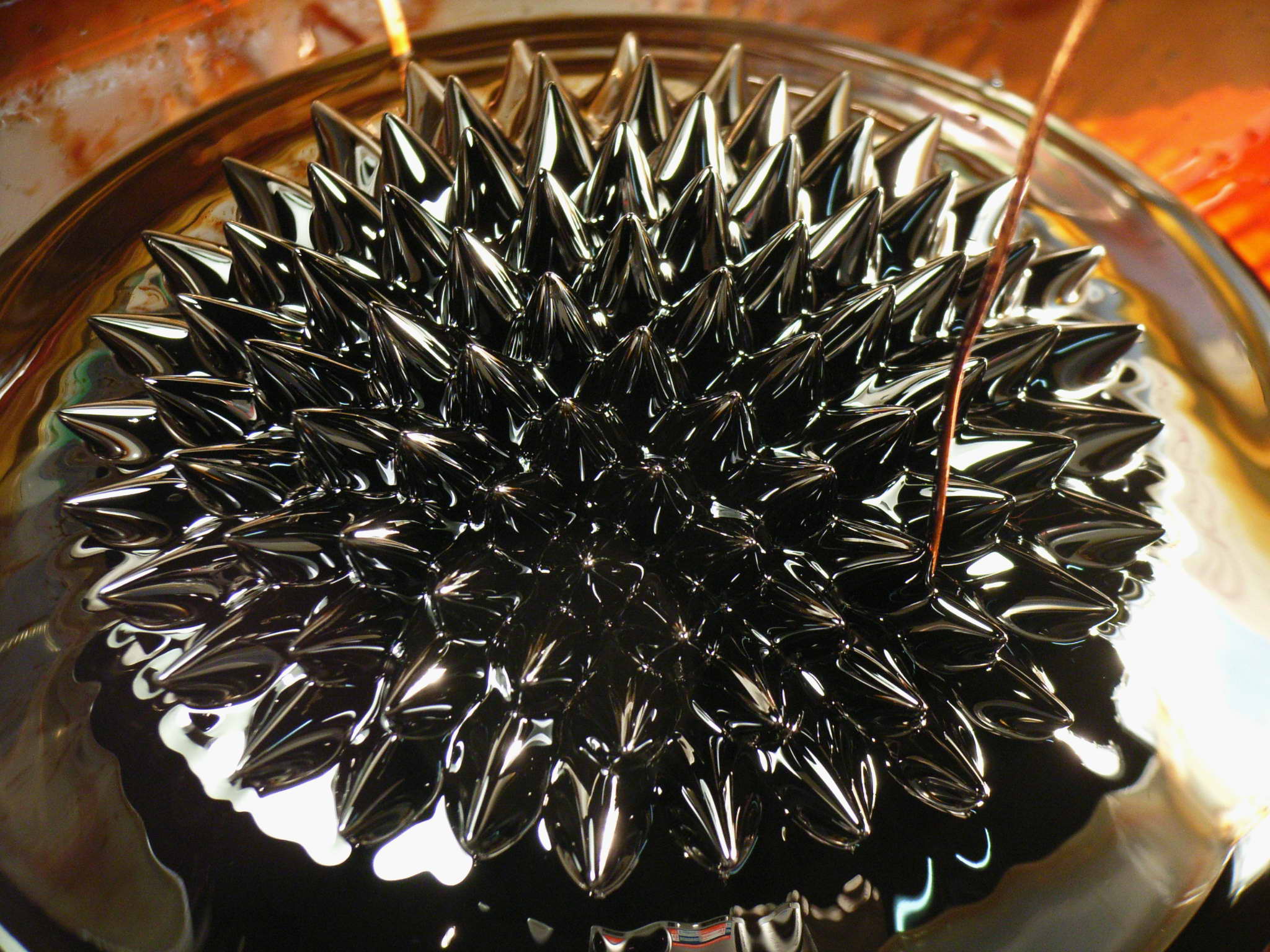
We’ve seen two of the most important forces that make it possible for us to consider words such as ‘reality’, ‘matter’, ‘universe’, etc. These forces are magnetism and gravity. Gravity is responsible for the elliptical orbits of planets; their shapes–’round’–are a result of this. Magnetism, which we’ve discussed with hands on activities using ferromagnetic fluids, is responsible for much of matter’s integrity. Both forces account for interactions between all kinds of hierarchies of matter: from atom to atom interactions; to the relationships that exist between galaxies.
The following post is a gallery of pictures taken from the web. Most images are very recent, not older than a few weeks in many cases. There’s a unifying theme between all of them: Cosmology, the study of the Cosmos. Think about this word, ‘cosmos’, while we go over these images. Think about the forces that allow for the cosmos to happen; and keep in mind that we, human beings, are part of the cosmos.
Images will be captioned; but I encourage you to do research on them.
Apollo 17 Lander over 40 years ago, on the Moon.
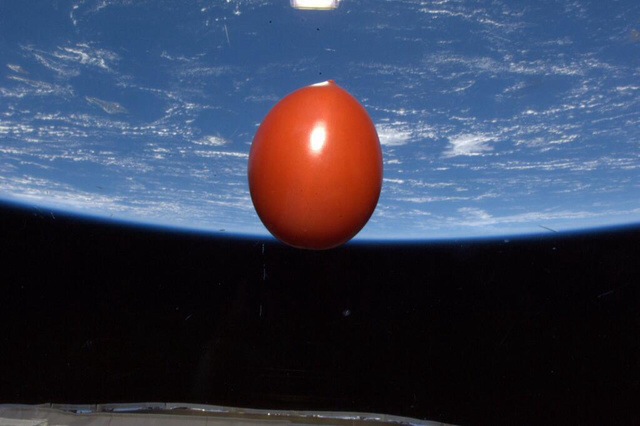
This is a tomato orbiting Earth: “It’s a snap from Japanese astronaut Koichi Wakata aboard the International Space Station. He tweeted the photo writing: “One fresh tomato for dinner makes us happy in space. It came up with us on Soyuz TMA-11M.”
This picture of the phenomenon known as Northern Lights, which has a lot to do with magnetism, was taken by Puerto Rican astronaut, Joseph M. Acaba.
This image of our star was taken a few days ago.
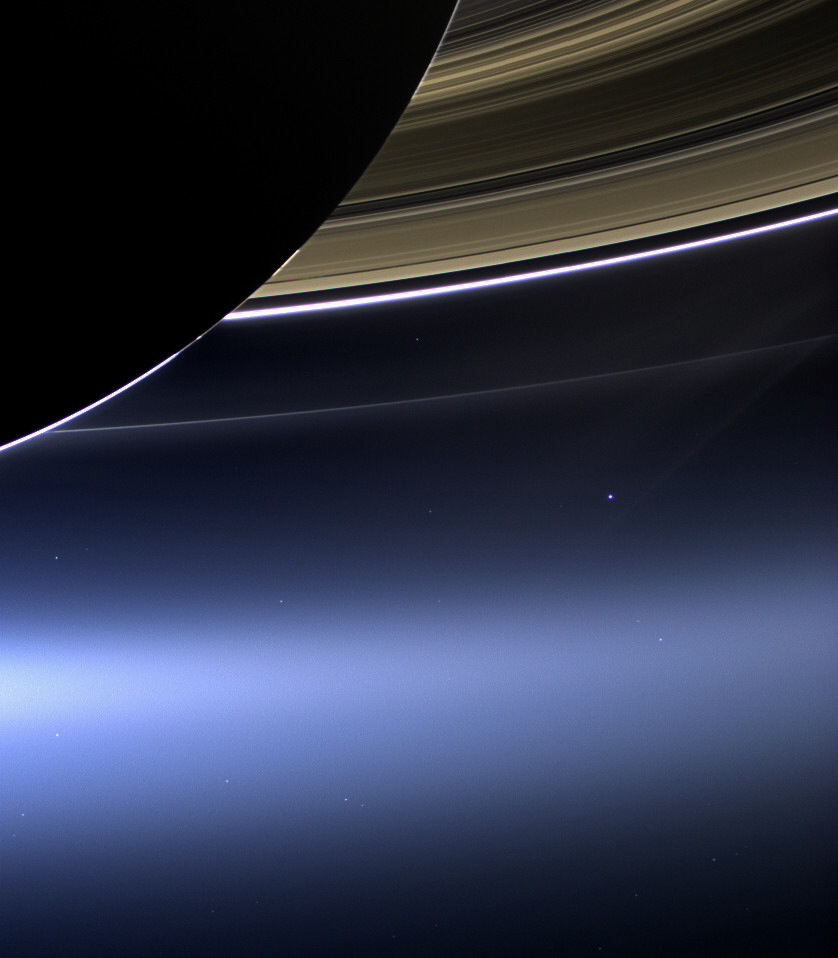
This one was taken by the Cassini probe before leaving our solar system behind. Can you see Earth?
Another glorious view of Saturn delivered by Cassini. The sun is reflecting against its rings, made from the debris of an ancient moon.
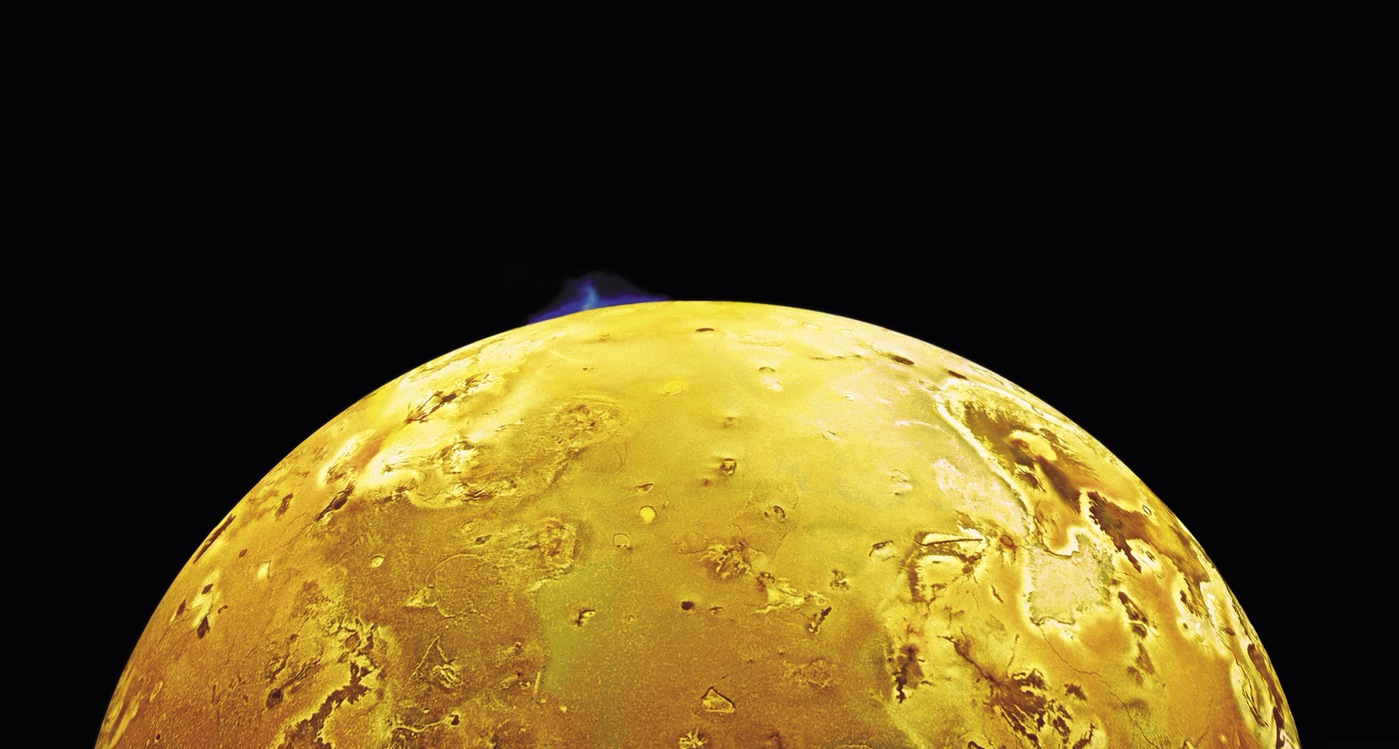
Speaking of moons, this one is Io, one of Jupiter’s moons, spewing an 80 mile high plume of water ice and sulfur dioxide.
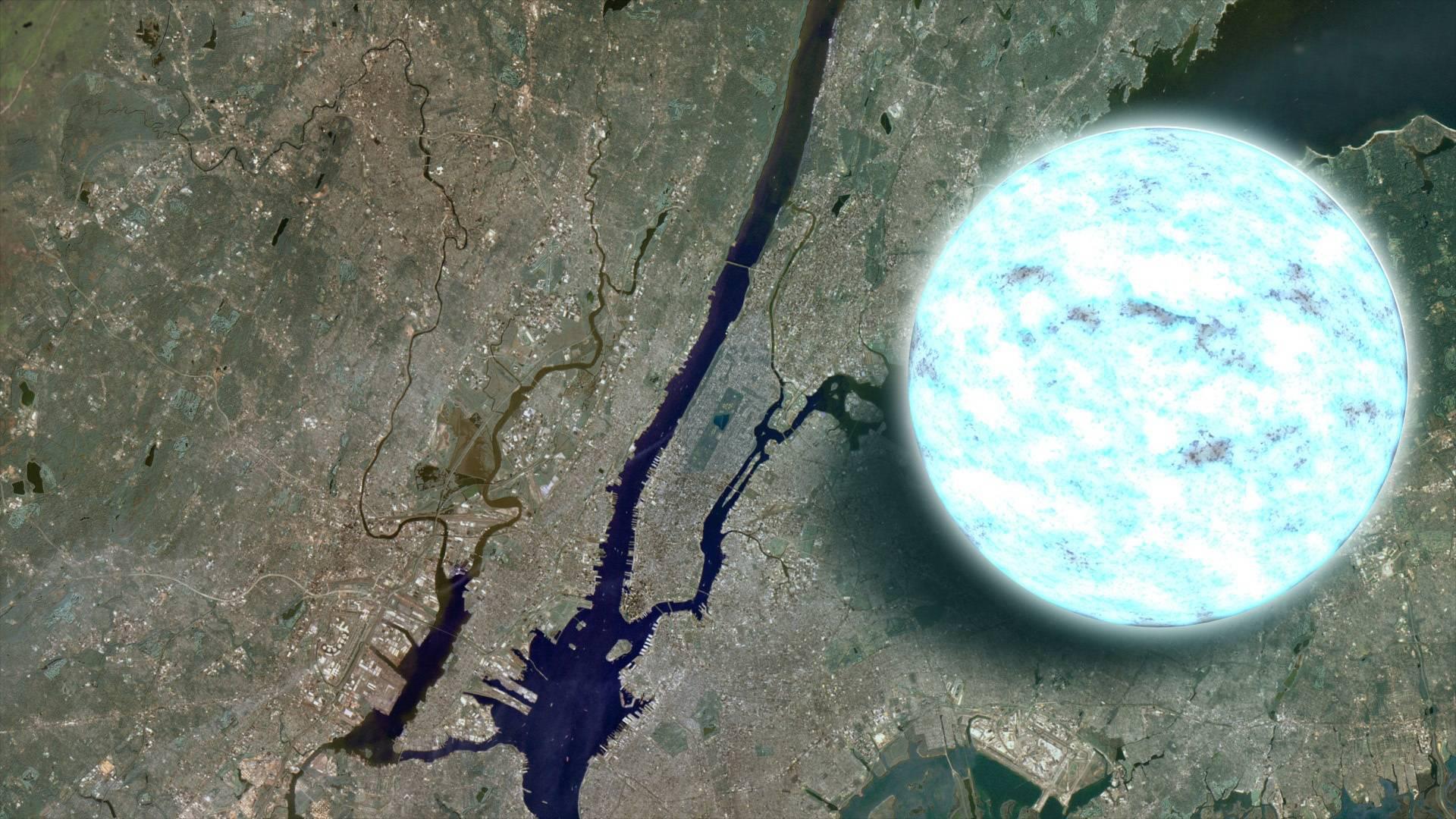
This an infographic of a neutron star, compared to the size of Brooklyn, NY. 300, 000 Earths can fit in its volume.
Neutron stars are old and dense, but there’s always an origin story. And stars have its origins in Stellar Nurseries such as this one.
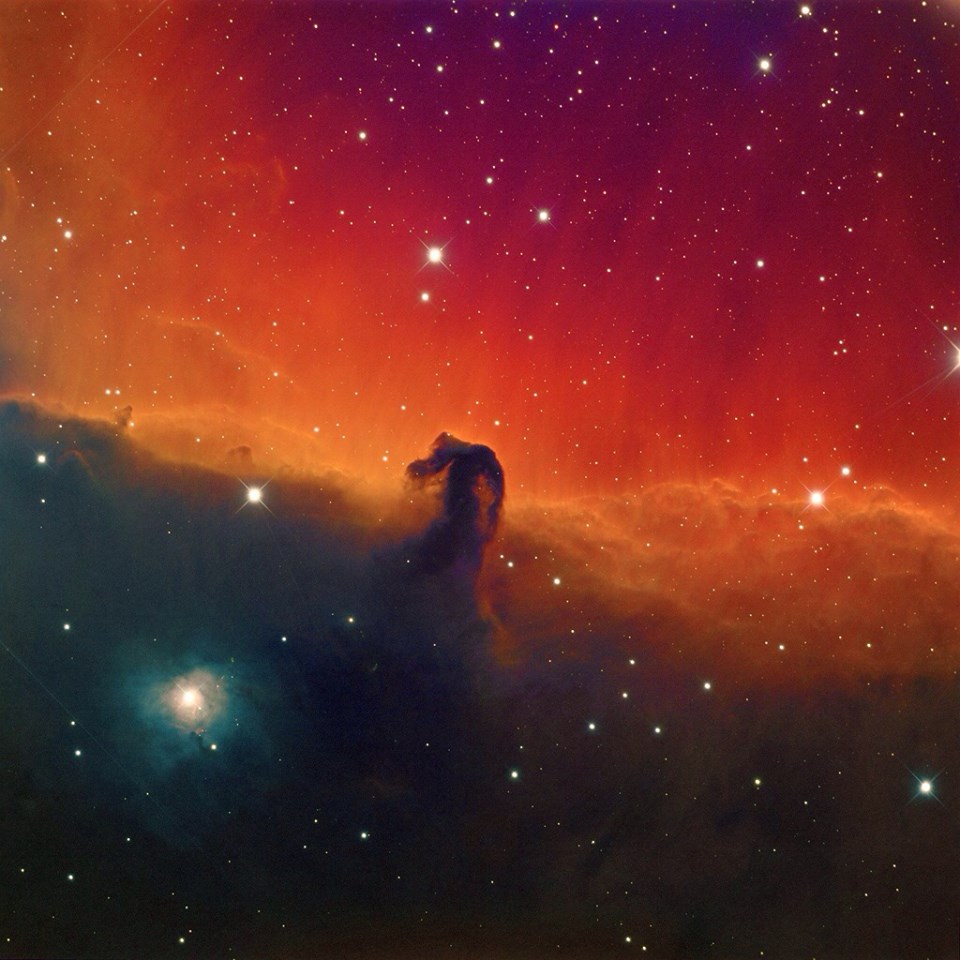
This is the Horsehead Nebula: “The red or pinkish glow originates from hydrogen gas predominantly behind the nebula, ionized by the nearby bright star Sigma Orionis.”
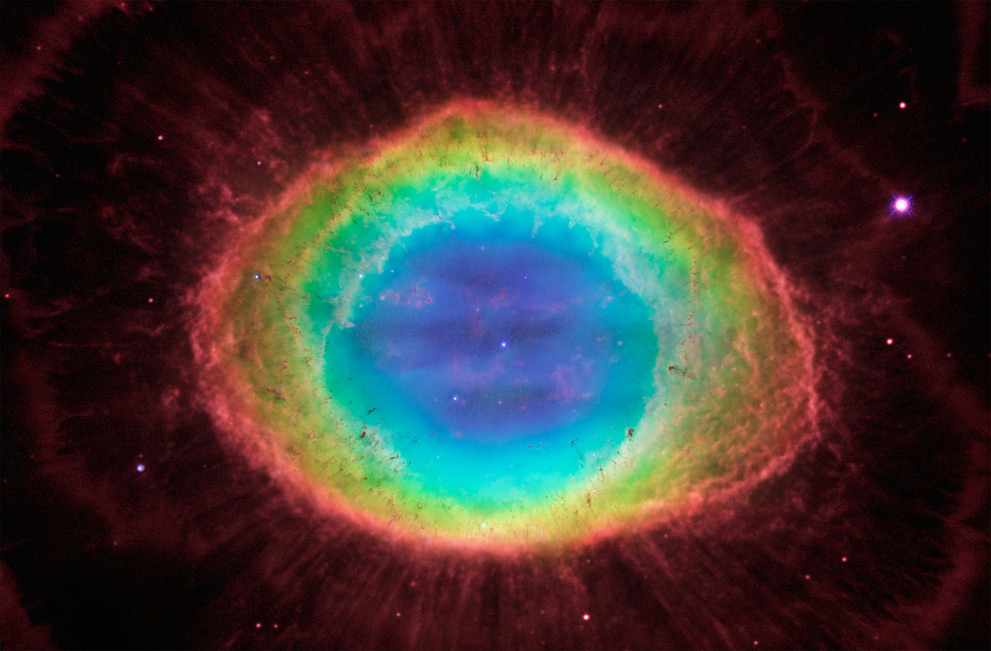
Another Nebula: “The Ring Nebula is a planetary nebula in the northern constellation of Lyra. Such objects are formed when a shell of ionized gas is expelled into the surrounding interstellar medium by a red giant star, which was passing through the last stage in its evolution before becoming a white dwarf.”
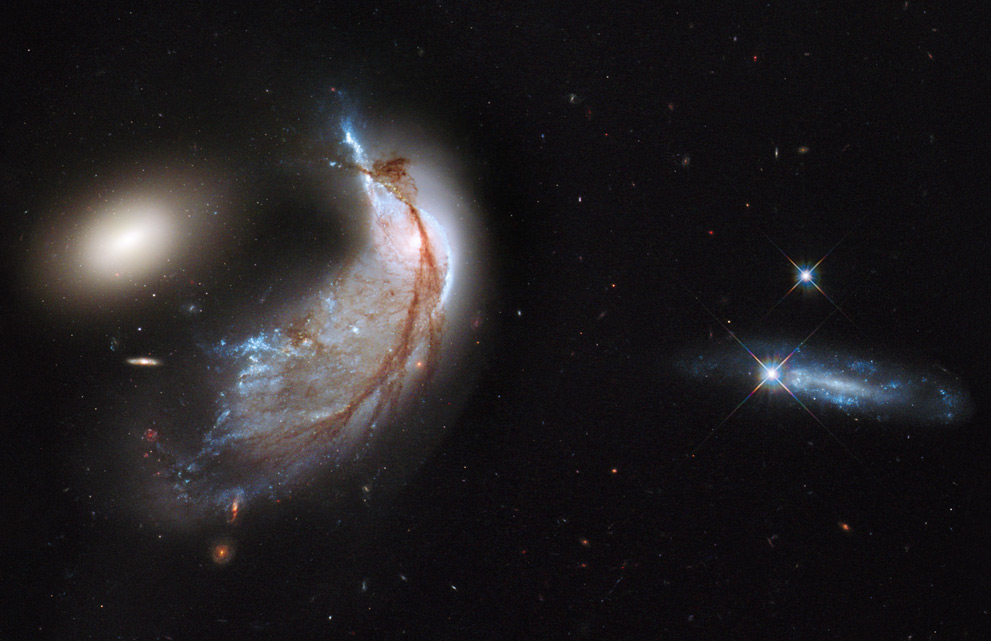
The cosmos dynamic and, in many cases, violent. This image of Arp 142 shows a collision between galaxies. The culprit: gravity.
The Butterfly Nebula (also known as NGC 6302): “The structure in the nebula is among the most complex ever observed in planetary nebulae. The spectrum of NGC 6302 shows that its central star is one of the hottest stars in the galaxy, with a surface temperature in excess of 200,000 K, implying that the star from which it formed must have been very large.”
There are many more amazing pictures of the cosmos (here, here, and here).
After watching these images, think about the following quote, attributed to Carl Sagan:
“The nitrogen in our DNA, the calcium in our teeth, the iron in our blood, the carbon in our apple pies were made in the interiors of collapsing stars. We are made of starstuff.”
Now that you’ve watched the images, and discussed Sagan’s quote: can you build a narrative from the images in this post? If so, how can this narrative be considered cosmology?
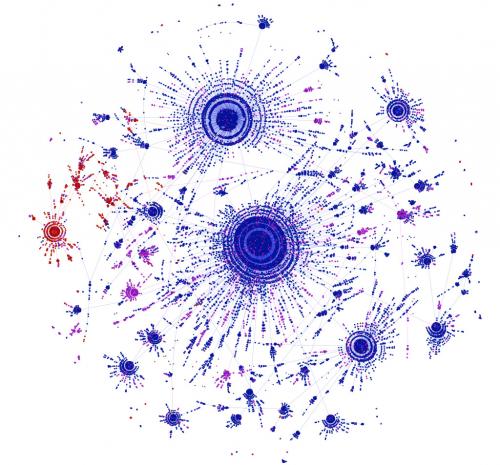
“A diagram showing the spread of the “No one should” meme on Facebook. Each node represents a different version, and each edge connects a version to the most likely ancestor variant. Nodes are colored by timing prompt: rest of the day (blue), next 24 hours (red), or other (purple), showing that mutations in the timing prompt are preserved along the branches of the tree. Credit: Lada Adamic.”–Via physorg.com
Consider the following statement: We are human beings, product of emergent mutations and natural selection. We’ve asked & answered questions about the cosmos; using animism, magic, religion, philosophy, and, more recently, science–
we are the universe aware of itself.
The patterns that resemble networks in our brains–galaxies are organized, as long as they are close enough, as networks; neurons are organized in networks; the Internet is one huge network–, are a big part of what makes us human. If we want to get a better grasp on what makes us human, to account for the relationship we have with the current technological context is a good way to start. Thus, nowadays, subjects as neuroscience, information theory, and consciousness research (a very tricky subject), are powerful tools when dealing with questions that have been with us for millennia…
How is humanity dealing with these questions in the 21st Century?
If you thought about heredity and the Internet as possible approaches to these questions, you are correct. Genetics and information theory (via biotechnology and infographics) can be put to use in interesting and interdisciplinary ways. Richard Dawkins–biologist–came up with the idea that cultural units (music, art, words, etc.) behave in ways that resemble genetic variation:
“Dawkins made his own jump from the evolution of genes to the evolution of ideas. For him the starring role belongs to the replicator (a DNA molecule, human consciousness), and it scarcely matters whether replicators were made of nucleic acid. His rule is “All life evolves by the differential survival of replicating entities.” Wherever there is life, there must be replicators. Perhaps on other worlds replicators could arise in a silicon-based chemistry—or in no chemistry at all.
What would it mean for a replicator to exist without chemistry? “I think that a new kind of replicator has recently emerged on this very planet,” Dawkins proclaimed near the end of his first book, The Selfish Gene, in 1976. “It is staring us in the face. It is still in its infancy, still drifting clumsily about in its primeval soup, but already it is achieving evolutionary change at a rate that leaves the old gene panting far behind.” That “soup” is human culture; the vector of transmission is language, and the spawning ground is the brain.
For this bodiless replicator itself, Dawkins proposed a name. He called it the meme, and it became his most memorable invention, far more influential than his selfish genes or his later proselytizing against religiosity. Memes propagate themselves in the meme pool by leaping from brain to brain via a process which, in the broad sense, can be called imitation,” he wrote. They compete with one another for limited resources: brain time or bandwidth. They compete most of all for attention.”
Mutations are a common occurrence in both scenarios: the digital and the organic (for more information on what memes are, you can click here). The following quote, taken from the article Facebook memes can evolve like genes, gives us some insight into what parallels are drawn between genes and memes:
“In many ways memes shape the culture and communities through which they move,” said Eytan Adar, an assistant professor in the U-M School of Information and the Department of Electrical Engineering and Computer Science. “The thing we really wanted to understand was how the cultures shaped the memes. This work has implications for understanding how people communicate and influence each other, and let’s us measure people’s beliefs, desires, values, and even what entertains and amuses them.”
Tools like the Yule-Simon distribution were used in this interdisciplinary research. Knowing this, do you think that concepts discussed in class, such as allele, mutation, selection, etc., are applicable to their findings? What examples taken from the article could you give that resemble concepts related to genetics and evolution?*
*If you answer these questions, you’ll be awarded a 5 point bonus in the Genetics exam (Feb 25, 10H; Feb 26, AP Bio).


!["[A] completely symmetrical structure can always keep the walking capability when any of its six faces of the hexahedron touches the ground."--Application in robotics, via.](https://thehypertextuallounge.com/wp-content/uploads/2014/05/hexahedron.gif)












 The Hypertextual Lounge


You must be logged in to post a comment.